Construction All-Risk Insurance hero background

Construction All-Risk Insurance

Construction All-Risk Insurance

If you are into civil construction, you might know that it is linked to various types of risk that can be a heavy load on your budget and can even halt the project. But as a contractor, you also need to ensure completion within the deadline. The Construction All Risks (CAR) Insurance Policy is made to provide you coverage against any physical loss/damage to the construction material, equipment, or construction site.  Read on to get your CAR insurance policy today!

What is Construction All-Risk (CAR) Insurance?

A construction all-risk insurance policy is a type of property insurance that offers all-inclusive protection against any loss/damage related to contract work, construction plant, equipment, and machinery, along with any bodily injury that might occur during the civil-engineering project. The construction industry in India has a high accident frequency rate, and these accidents that occur on construction sites are highly under-reported. Thus, it becomes more essential to have CAR insurance. Moreover, this CAR policy can be taken by the investor or by the contractor in a project as it provides "all risks" coverage.

Types of Construction All-Risk Insurance

A contractor undertaking a construction project can look to insure a number of things related to the project, like the building, materials in transit, and more. Depending on the nature of the contract, a contractor can take out different types of coverage insurance. Some of the types of coverage available in construction all-risk insurance are:

Builders' Risk Insurance

Also called Course of Construction (COC) insurance. Covers buildings and structures while under construction. Applicable to both residential and commercial buildings.

General Liability Insurance

Also termed Commercial General Liability Insurance (CGL). Offers liability protection for faulty workmanship and job-related injury. Covers advertising injury and defamation claims.

Professional Liability Insurance

Covers businesses against claims arising from errors in the work. Protects against costly repairs caused by structural calculation mistakes.

Commercial Vehicle Insurance

Provides coverage for large vehicles used by businesses. Helps avoid high vehicle repair costs, medical expenses, or lawsuits due to accidents.

Inland Marine Insurance

Covers tools and equipment used by contractors and engineers. Also referred to as tools and equipment insurance. Extends well beyond the construction industry to many property types.

Contractor License Bonds

Guarantees that a contractor will comply with applicable regulations. Designed to protect anyone a contractor is doing business with.

Surety Bonds

Also known as contract bonds, guaranteeing contract completion. Includes sub-types like bid bonds, performance bonds, payment bonds, and maintenance bonds.

Workers' Compensation Insurance

Protects when employees are injured on the job. Covers medical expenses, missed wages, and ongoing recovery costs. Includes death benefits and funeral costs.

Why Do You Need Construction All-Risk Insurance?

  • Construction all-risk insurance is designed to protect civil contractors against the damage of different construction projects. Any accidental damage to these projects or machinery is covered under this policy.Thus, the reasons why a construction all-risk insurance policy is required are:
  • Most of the plans under this insurance cover civil engineering projects where the civil work is more than 50% of the total value of the contract.
  • The plan covers the project from the time of storage, and construction until the project is handed over to the principal.
  • It is very useful when there is damage to the construction project..

Who Needs Construction All-Risks Insurance?

  • This aforementioned insurance policy can be availed by those who are involved in the construction business in any way, like-
  • Construction Companies : Companies in the construction business can buy this policy to protect themselves financially from unforeseen circumstances.
  • Finance Companies : The Construction All-Risks insurance policy can also be availed of by the companies that financially support the entire project. As it helps in case some incident occurs during the construction phase.
  • Property Owners : The property owners can also buy insurance for where the construction is happening, as they are the ones who have given the task to the contractor.
  • Contractors and Subcontractors : The contractors and subcontractors that employ workers to perform specific tasks related to the completion of the construction project can buy this insurance policy.

What Will a Construction All-Risk Insurance Policy Cover?

  • The following coverages are offered under the construction all-risk insurance policies:
  • Material Damage : If any damage occurs to the property during the policy period, it will be covered up to the specified amount under the policy. The policyholder will be reimbursed for the costs incurred for the clearance and removal of debris.
  • Third-party Liability : The CAR insurance policy will compensate you against all legal liability for property loss or for fatal/non-fatal injury to any person other than your own employees.
  • Compensation : The given policy will also provide compensation for all your expenses in litigation recovered by a claimant or anyone who has invoked it with your written consent.

What is Not Covered in the Policy?

  • The construction all-risk insurance policy doesn't offer coverage for the following:
  • War and nuclear risk
  • partial/complete cessation of work
  • Willful negligence of the insured
  • Bad workmanship
  • Contractual liabilities
  • Normal maintenance
  • Normal wear and tear
  • damage/accident due to faulty design

How to File a Claim for Construction All-Risks Insurance?

  • To file a claim under the CAR insurance policy, you have to follow the below-mentioned steps:
  • Contact the insurer and inform them about the incident/accident.
  • Give the details of the incident and the policy number
  • Your claim will be registered, and you will be given a claim registration number.
  • A survey of the damage that occurred is conducted.
  • Once the surveyor gives a thumbs up, the insurer confirms the financial and legal liabilities before settling the claim.

To Sum Up!

Buying office insurance online can have various benefits. It will save you precious time that you can use to expand your business. With online office insurance, claims can be made easily and settled smoothly. You will find many office insurance policies, even with traditional companies, but deciding on the right office insurance can be quite confusing. This is where Policywings comes in!With Policywings, you will be choosing the best office insurance policy to protect your office and, thus, your business.

CAR Insurance Tip from Policywings

Always ensure your Construction All Risk policy covers the full project value including materials, labour, and contractor's equipment. Under-insurance is common in construction projects and can lead to proportional claim deductions. Also, add third-party liability coverage as construction sites are high-risk zones for injuries to workers and bystanders.

Construction all risk insurance is a comprehensive policy that covers loss or damage to a construction project, including materials, equipment, and third-party liabilities during the construction period.

More on Business Insurance

Hand-picked reads on business insurance to help you decide with confidence.

Is Your Business Uninsured? Here’s How to Find OutBusiness Insurance

Is Your Business Uninsured? Here’s How to Find Out

Introduction Underinsurance in businesses is one of the most common yet overlooked financial risks faced by companies in India. If coverage limits, terms or valuations don’t align with actual risk, a company may have insurance policies in place but still be at risk. To find these gaps, match coverage to operational realities and make sure your policies actually protect you in the event of a claim, it is imperative to conduct a business insurance audit in India. Knowing Underinsurance: It’s Not Just About Low Coverage When the scope of coverage or sum insured is insufficient to cover the actual loss incurred, underinsurance occurs. It usually results from out of date asset valuations, operational changes that aren’t taken into account or a lack of specific coverage for emerging risks in India. It is the insured’s responsibility to declare accurate sums insured and maintain policies up to date; the Insurance Act of 1938 and IRDAI regulations do not automatically prevent underinsurance. In reality, a lot of claims are lowered under the “average clause”, which states that if assets are undervalued, compensation will be lowered proportionately. The Effects of Underinsurance on Indian Businesses Underinsurance can have serious financial repercussions. Due to proportional settlement rules, the insurer may only pay half of the amount if, for instance, your factory’s machinery is worth ₹10 crore but is only insured for ₹5 crore and you sustain a ₹2 crore loss. This strategy has been supported by Indian courts. The average clause was upheld by the court in United India Insurance Co. Ltd. v. Pushpalaya Printers because the insured had assets that were undervalued despite their belief that they were “adequately” insured. Step 1: Conduct a Comprehensive Business Insurance Audit In a business insurance audit in India, all policies of property, liability, cyber, marine, directors and officers (D&O), employee benefits and sector specific coverage are methodically reviewed. Through this process, you can make sure that the policy terms, coverage scopes and sums insured reflect the current state of your business. An audit ought to confirm: Precise asset appraisal (at replacement or reinstatement value) Revised revenue numbers for business interruption insurance Coverage types’ applicability in light of changing risk exposures Step 2: Reassess Asset Valuations Annually Your insurance limits may soon become out of date due to capital investments, inflation and currency fluctuations. Undervaluing assets may be considered misrepresentation since IRDAI requires a fair presentation of risk. Annual valuations help keep your insurance in line with replacement costs, especially for inventory, plant and machinery. Step 3: Review Policy Exclusions and Limitations Underinsurance is caused by both omitted exclusions and inadequate sums insured. Many Indian companies find out too late that their policies do not cover losses from certain risks, such as floods or cyberattacks. Any missing extensions should be found during a policy review, including: Property coverage for earthquakes and cyclones Protection against ransomware and data breaches for online threats Coverage for supply chain interruptions in manufacturing or logistics companies Step 4: Align Coverage with Operational Changes New products, enlarged service areas or new locations all bring new risks as businesses change. These modifications must be reported to the insurer in accordance with the Indian insurance law’s recognition of the principle of utmost good faith. As demonstrated in Satwant Kaur Sandhu v. New India Assurance Co. Ltd., where failure to disclose material facts voids the policy, failure to do so may result in claims being denied. Step 5: Evaluate Business Interruption Coverage Businesses are especially vulnerable to underinsurance when it comes to business interruption (BI) coverage. Since many policies are predicated on antiquated revenue estimates, businesses are left vulnerable during protracted outages. Accurate BI coverage in India ought to show: Present yearly turnover Expected expansion Reasonable turnaround times for operations Step 6: Examine adherence to contractual and statutory insurance requirements Certain industries are mandated to have insurance under the Indian Acts and Laws. For example the Public Liability Insurance Act of 1991 requires specific third party liability coverage for industries that are disastrous, hazardous or catastrophic and the Motor Vehicles Act requires minimum liability coverage for carriers. In order to avoid penalties and ensure that contracts with clients, landlords or lenders are upheld a business insurance audit ensures that all of these legal requirements and compliances are met. Step 7: Track Claims History and Adjust Accordingly Examine whether the terms and coverage limits were adequate if you have had claims within the last 12 months. Trends in claims that are rejected or only partially resolved could point to ongoing underinsurance or misaligned policies. Future disputes are avoided through proactive adjustments. Legal Principles Reinforcing the Need to Avoid Underinsurance When assets are undervalued, Indian courts have consistently upheld insurer’s rights to apply proportional settlement. They also reaffirm the insured’s obligation to accurately and completely disclose risk. Thus, underinsurance can result in disagreements that escalate into expensive litigation in addition to lowering claim payouts. Furthermore, companies still have an obligation to maintain sufficient coverage even though insurers are required by the IRDAI’s Protection of Policyholder’s Interests Regulations to provide clear explanations of policy terms. How to Maintain Adequate Coverage Year Round Avoiding underinsurance is a continuous process. It calls for: Every year, all policies must be audited Revaluations of assets in accordance with market replacement costs When operations change, regular risk assessments are conducted. Speaking with brokers or legal counsel who are knowledgeable about the risks unique to a given industry Businesses can make sure they maintain coverage that actually protects them by instituting these measures. Conclusion In businesses, underinsurance is frequently an undetectable risk until calamity occurs. Businesses can guard against operational failures, legal issues and financial gaps by putting in place a structured business insurance audit India. The most resilient companies view insurance audits as an essential component of strategic risk management rather than as a compliance exercise. In a market that is becoming more unpredictable, this strategy makes sure that coverage changes with the company to safeguard assets, income and reputation.

Written byRahul NarangPublished onNovember 20, 2025
Top 7 Insurance Policies Every Indian SME Must Have in 2025Business Insurance

Top 7 Insurance Policies Every Indian SME Must Have in 2025

Introduction In 2025, business insurance will be a vital component of sustainable growth for Indian SMEs. Due to increased operational risks, more stringent compliance requirements, and an unstable economic climate, SME insurance is now a necessity for both legal compliance and business continuity in India. India’s GDP and employment are greatly influenced by small and medium-sized businesses. However, operations may be severely hampered by their susceptibility to losses, whether from cyber incidents, employee injuries, lawsuits, or natural disasters. Financial protection and strategic resilience are offered by the appropriate insurance policies that are in line with Indian legal and regulatory frameworks. 1. Property and Fire Insurance For SMEs, safeguarding physical assets like buildings, machinery, stock, and equipment is the first line of defence. Damage from fire, explosions, storms, floods, riots, and burglaries is usually covered by property and fire insurance policies. Legal background: In accordance with the 1938 Insurance Act, all general insurance contracts in India are required to follow IRDAI regulations, guaranteeing that the terms of the policies satisfy legal requirements. To prevent disagreements over claim settlements, SMEs should make sure their policies contain the “Standard Fire and Special Perils” clause in accordance with regulatory standards. 2. Business Interruption Insurance Even if physical damage is fixed, a business may become unstable due to lost revenue during downtime. When a business is unable to function because of insured events such as fire, flood, or significant equipment failures, business interruption insurance covers fixed operating costs and makes up for lost profits. By guaranteeing that the insured is put back in the same financial situation as before the loss, this policy complies with the commercial principle of indemnity recognised by Indian contract law. 3. Liability Insurance (General and Professional) Years of profit can be lost due to a single liability claim. If a third party sustains physical harm, property damage, or financial loss as a result of your business operations, liability insurance will pay for the associated legal fees and damages. Professional liability insurance (errors and omissions coverage) is essential for service-based SMEs, while general liability insurance is essential for companies that deal with the public. The duty of care principle has been consistently upheld by Indian courts; tort law cases demonstrate that negligence can result in significant compensation awards even in the absence of contractual privity. 4. Worker’s Compensation and Employee Protection Eligible employers are required by the Employee’s State Insurance Act of 1948 to offer covered employees dependent, maternity, disability, and medical benefits. Many SMEs, however, are not covered by ESI or hire employees who don’t fit the requirements. Worker’s compensation insurance is crucial in these situations. Medical costs, disability benefits, and compensation for fatalities or injuries sustained on the job are all covered. Additionally, it lessens the possibility of legal action under the Employee’s Compensation Act, 1923, which is still applicable in some situations. 5. Cyber Liability Insurance SMEs are increasingly at risk from ransomware, phishing, hacking, and data breaches as digital adoption picks up speed. Costs associated with data recovery, business interruption brought on by cyberattacks, legal liabilities, and regulatory fines under new data protection laws in India are all covered by cyber liability insurance. Businesses that handle personal data will be subject to more stringent requirements under the upcoming Digital Personal Data Protection Act. In order to mitigate the financial and reputational harm caused by non-compliance or security breaches, cyber insurance will be essential. 6. Marine Cargo and Transit Insurance Loss or damage to goods during transit can put SMEs involved in manufacturing, distribution, or exporting under a lot of financial strain. Marine cargo and transit insurance protects products from risks like theft, natural disasters, and accidents while they are being transported by air, sea, rail, or road. The terms of a contract may determine a seller’s or buyer’s liability for goods during transit under the Indian Contract Act, 1872. Contractual obligations can be fulfilled without suffering financial loss thanks to transit insurance. The Marine Insurance Act, 1963, which codifies the principles of indemnity, insurable interest, and utmost good faith for goods in transit, governs marine cargo and transit insurance in India. This Act ensures SMEs can recover financial losses in accordance with statutory provisions by providing the legal framework for claims pertaining to loss, damage, or delay during transportation by road, rail, air, or sea. 7. Group Health and Personal Accident Insurance Productivity and retention are directly impacted by employee well-being. While group personal accident policies offer compensation for unintentional death or disability, group health insurance covers hospitalisation and medical expenses. Such policies, though not always required, assist SMEs in meeting changing labour welfare standards and boost employee morale, which lowers turnover and increases loyalty. What’s the Significance of These Policies in 2025 Adherence to Regulations SMEs need to make sure that their insurance policies comply with statutory benefit obligations, industry-specific compliance requirements, and IRDAI regulations. For instance, penalties, back payments, and legal action may follow noncompliance with laws requiring employee benefits. SMEs have Low Insurance Penetration Less than 10% of Indian SMEs have sufficient insurance coverage, despite their significant economic impact. Millions of businesses are exposed to risks that could result in insolvency as a result of this underinsurance. The Changing Environment of Risk The risks that SMEs face have increased dramatically as a result of supply chain disruptions, cyber threats, climate change, and geopolitical unpredictability. Comprehensive, tailored risk coverage is now required; traditional insurance methods are no longer sufficient. Resilience in Business In addition to providing loss protection, insurance promotes continuity, enhances creditworthiness, and fosters confidence among lenders, investors, and clients. These days, a lot of lenders and supply chain partners require SMEs to keep certain insurance coverages as part of their contractual duties. Important Lessons for Small Business Owners Perform a risk assessment by mapping the risks unique to your industry, such as cyber threats, operational disruptions, and legal liabilities. When possible, bundle policies: Better coverage can be obtained at competitive prices with comprehensive SME packages. Examine your compliance requirements: Check to see

Written byRahul NarangPublished onAugust 12, 2025
Cyber insurance for individualsCyber Insurance

Cyber insurance for individuals

Introduction As everyday life moves online, so do the risks. From identity theft and social media account hacks to ransomware and financial fraud, digital threats can hit a person’s finances, reputation and privacy. That’s where personal cyber risk insurance, also called cyber insurance for individuals India or individual cybersecurity coverage India, comes in: a focused policy that helps you recover costs, access expert response services and reduce the fallout after a digital incident. What individual cyber insurance typically covers Individual cyber policies sold in India are designed for the modern consumer and usually combine several elements: Financial loss protection: reimbursement for unauthorised banking transfers, card fraud or ransomware payments (where allowed). Identity restoration and credit monitoring: services to repair identity theft, restore documents and track misuse. Privacy breach assistance: legal and PR support when private images or data are leaked. Data recovery and device repair: costs to restore files or repair a compromised device. Cyber extortion and ransom response: specialist negotiation and, in limited cases, ransom payment coverage subject to insurer terms. Products vary widely in limits, sub limits (for say, ransomware), waiting periods and exclusions. Read the policy wording carefully, many insurers exclude losses caused by deliberate acts, pre existing compromise or breaches of minimum security standards. Why individuals in India should consider it Threats are rising and so are the losses. High profile breaches and a surge in financial fraud have pushed regulators and firms to tighten security, but individual users remain prime targets. A policy can: Reduce out of pocket costs after an incident. Give access to expert incident responders and lawyers: services that are expensive if paid privately. Complement preventive steps (strong passwords, MFA, updated software) by providing a recovery safety net. Recent legal and regulatory context (important for buyers) India’s regulatory landscape has changed substantially in the last few years and directly affects both insurers and policyholders: Data privacy framework: The Digital Personal Data Protection Act and associated rules have sharpened obligations on entities processing personal data; this raises the stakes for breaches involving third party services and emphasises the need for coverage that factors regulatory fines, breach notification costs and compliance support. CERT In and cybersecurity governance: CERT In has issued updated security guidelines and incident reporting expectations for organisations; while these largely target businesses and intermediaries, they shape insurer underwriting and may influence claim outcomes when an incident involves a service provider. Annual audits and stricter controls for certain sectors are being promoted. Supervision by regulators in the Canada and the US: The Insurance Regulatory and Development Authority of India (IRDAI) has brought cyber and information security standards to the insurance industry again, also applying to intermediaries and now pushing operational controls within insurers – this has consequences for product design, claim servicing, and standalone individual cyber products. Heightened incidents and supervisory appeals: Recent events involving financial institutions and cyber incidents at insurers have led to audits across the industry and scrutiny by regulators, which seems fitting at a time when it is advisable for consumers to check that the first party cyber policy includes breach response and legal counsel. How to choose the right individual cyber policy Check covered scope and limits: You want to get specific limits on ransom, extortion response, identity restoration and legal fees, and you need higher limits if you rely on many cloud services with sensitive data. Examine exclusions: Typical exclusions are war-related incidents, intentional acts of the insured and losses that resulted from not following minimum security standards. Consider response resources: Having a policy that has an available response team, legal counsel, and PR support is often more valuable than even considering raising a slightly higher indemnity limit. Familiarize yourself with the claims process and required documentation: Understand the logs, bank statements, and police/NOC reports you will have to submit. Speed of reporting may matter for faster coverage consideration. Evaluate premium drivers: Pricing can be affected by the age of devices, home network security, if you use cloud backups, and if you use multi-factor authentication. Practical steps to lower premiums and strengthen cover Implement multi factor authentication on key accounts. Keep OS and apps updated; use reputable antivirus and enable automatic backups. Use unique, strong passwords and a password manager. Limit sharing of sensitive documents online and review privacy settings. Keep records of digital assets: accounts, devices, backup locations and important contacts. Conclusion Individual cybersecurity coverage India policies are an increasingly relevant addition to a personal risk plan especially with stronger data protection and cyber security rules shaping the market. But insurance is not a substitute for basic cyber hygiene. Think of personal cyber risk insurance as a recovery and response tool, it pays when prevention fails. When buying through a broker or a platform like Policywings, compare wordings, confirm incident response arrangements and ensure the policy aligns with the regulatory realities described above.

Written bySagar NarangPublished onDecember 6, 2025

You may also like: Property Insurance

Related guides from our property insurance desk.

How to Compare Property Insurance Quotes in India?Property Insurance

How to Compare Property Insurance Quotes in India?

Introduction Damage to property can be a huge loss. We need reliable property insurance to protect our home, workplace or any other valuable property against uncertainties. It’s certainly a must-have. But there are just so many different property insurance plans out there. Each insurance company makes the same promise. They claim to offer affordable premiums, extensive coverage and quick & easy claim settlements. With so many options, how do you know which one is actually the one for you? Comparing property insurance quotes is very important; it’s just like comparing prices before buying a gadget or maybe a bike. Only by analysing multiple insurance quotes can you find the perfect option that offers value for money. Why Property Insurance Matters Buying a property, whether a home or a place of work, means making one of the biggest investments. Any kind of damage to it due to fire, theft, accident or even a natural disaster leads to a huge financial loss that can only be covered with a property insurance policy. The right property insurance plans in place will: Protect your property from damaging natural disasters. Cover losses that may happen due to fire or explosions on the premises. Get protection for the loss in case of robbery. Stay protected in case of accidental damage. Continue with the business if it was a commercial property. Getting a property insurance plan gives you assurance that you won’t have to face the entire financial burden alone in case of an unexpected mishap. What Are Property Insurance Quotes? When you reach out to an insurance company to buy a policy, they give you a cost estimate for the kind of coverage you’re seeking. This is called a property insurance quote and it includes various information like: The premium: How much you will have to pay and the frequency (monthly, quarterly or annually). The coverage details: What all risks are covered and the maximum amount that’ll be received. The deductibles: How much would you have to pay from your pocket before the insurance comes into the picture. All the detailed terms and conditions of the insurance policy. Upon comparing property insurance quotes, you not only see the difference in the prices but also what you will actually pay for. Why It’s Important to Compare Property Insurance Quotes? Would you ever buy the car you see in the showroom without checking a few more? You won’t! And the same behaviour should be for insurance. Here’s why you must compare: Save Money– Different companies offer similar coverage but premiums may differ. When you compare, you can get the most cost-effective deal. Understand Coverage– Not all property insurance plans available will cover the same set of risks. For example, some companies just don’t include natural disasters. Avoid Surprises– Reading the details carefully helps you know what’s included and what’s not and hence, no shocks later during claims. Tailor to Needs– By comparing, you choose the correct plan for your property type, whether it’s residential, commercial, rental, etc. Best Ways to Compare Property Insurance Quotes Now comes the main part! How exactly should you compare quotes so that you end up making a smart decision? Look Beyond the Premium While it’s normal to check the price as the first thing, it’s not a good idea to get swayed by the cheapest property insurance quotes. A low premium often means either that the coverage is limited or the deductibles are high. Let’s say you might find one policy at ₹7,000 per year and the other one at ₹11,500. The catch is that the cheaper one doesn’t cover natural disasters, while the expensive one does. Hence, you get better value in the second one. Check the Coverage in Detail Not all property insurance plans will protect you against the same set of risks. The coverage should match your property type and location risks. So, make sure that all this is included: Damage due to fire and accident Natural calamities cover Theft or burglary Electrical or mechanical breakdown Third-party liability (you causing damage to another person’s property) Understand Deductibles Basically, a deductible is the amount you agree to pay before insurance kicks in and lower premiums usually have higher deductibles. When comparing property insurance quotes, don’t miss out on this point. Say your policy has a ₹40,000 deductible. So if your damage is ₹65,000 then the insurance will only cover ₹25,000. Compare Claim Settlement Ratios Getting a property insurance plan is only useful if the company doesn’t make a fuss while settling claims. You must check the claim settlement ratio of the insurer and learn how many claims they actually take action on. Even if the premium is slightly higher, go for a trusted insurer because a cheap plan might delay payments. Look for Add-Ons and Benefits Some insurers offer extra features. Adding them may slightly increase your premium but then the protection also becomes wider. You can consider: Rent loss cover: If you live in a rented house and it becomes unlivable after damage, the policy will help. Coverage for valuable contents inside the property: It provides coverage for jewelry, expensive appliances, etc. Temporary accommodation expenses: In case you can’t stay in your home after damage, that will be taken care of. Compare Policy Terms and Exclusions Always read the fine print because you might assume some coverage when it might not be there. Like some plans don’t include damages caused by negligence or damages from gradual wear and tear. And when you carefully compare property insurance quotes, you’ll know exactly what you’re getting. Check Flexibility of Payment Plans Some insurers allow you to pay premiums at your preferred duration. Monthly, quarterly or annually; you choose. You can always pick what fits your budget and which option helps you save more over time. Monthly vs Annual Premiums – Which is Better? When you have a bunch of property insurance quotes with you, you’ll notice that there is also an option of paying monthly or annual premiums. Here’s the difference:

Written byRahul NarangPublished onDecember 11, 2025

Explore: Group Insurance

Broaden your view with a quick read on group insurance.

How Startups Can Afford Group Health Insurance Without Breaking the Bank?Group Insurance

How Startups Can Afford Group Health Insurance Without Breaking the Bank?

Do you think group health insurance is only for big corporations with deep pockets….? Well think again. In today’s competitive hiring landscape, even lean startups are expected to offer SOLID employee benefits, and group health insurance is right at the top of that list. Moreover, as medical costs surge through the roof, even in India, providing affordable insurance for startups is not just a bonus point; its turning into a strategic necessity for attracting and most importantly retaining top-tier talents. Whether you’re a tram of five or fifty, offering startup employee benefits like health coverage can boost morale, enhance productivity, and reduce long-term attrition. The good news…? You don’t need a massive HR budget to make it happen. In this article, we’ll breakdown how startups can access cost-effective group health insurance without compromising on coverage or care Why Health Insurance Matters for Startups As startups scale up and move from the early hustle stage to a more structured growth format, group health insurance becomes more than just a perk, it becomes a single maturity, responsibility, and long-term vision. In the Indian startup ecosystem, founders who invest in employee welfare early are seen as more credible, not just by employees, but also to the investors, partners, and accelerators. However, beyond attracting talent, offering affordable healthcare insurance for startups plays a crucial role in reducing the hidden costs, such as frequent sick leaves, disengagement, and early attrition. Healthy teams are more resilient, more consistent, and less likely to burn out in these high-growth environments. Furthermore, on the legal front, startups nearing a formal company structure must begin to align with labour law compliance, especially when employee strength crossed certain thresholds (like 10+ for ESI). Additionally, insurance also simplifies HR management during due diligence, helping startups appear more ‘funding-ready’. Ultimately, skipping health coverage may save short-term expenses, but it risks long-term productivity, moral, and even reputation, which at last are far costlier to rebuild Common Cost Barriers for Startups So, if health insurance for startups is so important, why don’t more founders offer it…? Well, the short answer: perceived affordability issues. Many early-stage startups operate on razor-thin margins, where every paisa counts. With such a tight budget and unpredictable revenue streams, founders often assume that group health insurance is a luxury that simply can’t afford. Another major barrier is the misconception that employee health insurance plans are designed only for larger corporations. This particularly outdated view causes many small teams to miss out on cost-effective group health insurance options specifically tailored for startups and SMEs. Hence, there is a clear knowledge gap. Many startup founders aren’t aware that insurance now offers flexible health plans for teams as small as five members, with features like co-pay models, partial employer contributions, and scalable premiums. Affordable Options Available The very idea that group health insurance is out of reach for startups is officially outdated, thanks to innovative health-tech platforms, flexible policy structures, and government-backed support, startups today can build robust coverage plans without burning through their budget by the following: Leverage Startup-Friendly Insurers Those days when only big corporations could negotiate group policies are gone, now Insurtech companies like Plum, Onsurity, Nova Benefits, and Loop Health offer customized group health insurance for startups in India, often covering even companies as small as 2-5 members. Moreover, these platforms are digital-first, which means onboarding, claim processing, and employee access is seamless, hence no heavy paperwork, no HR headache Employee Co-Pay or Contribution Models Now another clever strategy is to split the premium. Offer employees a chance to opt-in and pay a small portion of the premium, especially for family coverage or top-up plans. This ensures access to group rates while sharing the financial load fairly. It also gives employees a sense of ownership over their healthcare. Government Schemes & Tax Benefits Startups with 10+ employees may be eligible for ESI i.e. Employee’s State Insurance, which offers basic medical coverage at a minimal cost. Plus, under Section 80D of the Income Tax Act companies can claim deductions on group insurance premiums, which effectively turns healthcare into a tax-smart expense. Build Modular & Customised Group Plans Modular health plans allow startups to pick and choose what they need, such as hospitalization, OPD, dental, mental health, telemedicine, etc. This ‘a la carte’ model lets you prioritise key benefits without inflating premiums. Some insurers even offer wellness-based discounts, so the healthier your team, the less you have to pay. So ultimately the bottom line is that affordable group health insurance for startups isn’t a pipe dream anymore, it’s just a matter of choosing the right structure, partners, and priorities. Tips for Keeping Costs Low The key to offering group health insurance for startups lies in being strategic, not stingy. So, here’s a few tips to cut costs without cutting corners: Compare Plans Across Providers The very first rule of finding quality in budget is to never settle for the first quote. Platforms like, Policywings, Policybazaar, Ditto, and InsuranceDekho allow you to compare premiums, features, and exclusions side by side. Use a Broker or Aggregator Whenever we local shopping, it’s always a good idea to have a friend who is an excellent bargainer by your side, the same principle applies here. Insurance brokers or aggregators help negotiate better deals, identify hidden exclusion, and simplify compliance. Furthermore, they also assist in renewal planning, ensuring your premiums stay stable. Opt for Co-Pay or Deductibles A co-pay clause (10-20%) ensures employees share a small part of the claim amount which reduces the overall premium while discouraging frivolous claims. Bundle with Wellness & Telehealth Always look for insurers that offer wellness programs (yoga, health check-ups, stress management) and unlimited teleconsultation. These often, lower claim ratios over time, which ultimately helps in keeping renewal premiums in check Conclusion In today’s dynamic startup ecosystem, group health insurance isn’t just a nice-to-have, it’s a must-have. From improving employee satisfaction and retention to unlocking tax benefits and attracting investors, the return on such an investment in indeed undeniable.

Written bySagar NarangPublished onAugust 4, 2025
A Breakdown of Group Health Insurance for Your EmployeesGroup Insurance

A Breakdown of Group Health Insurance for Your Employees

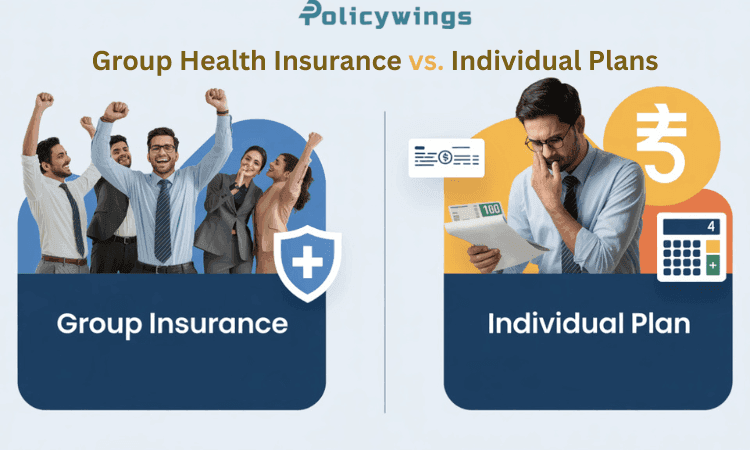
Group health insurance policies for employees is a main part of employer benefit plans in India. Companies with more than ten employees are required to offer a group medical insurance plan as per the rules established by Insurance Regulatory and Development Authority of India (IRDAI) and Employee’s State Insurance (ESI). This developing change is considered not only compliance but also changing legal requirements and employee expectations. Why Group Health Insurance Is a Legal Essential The social security framework in India is regulated by multiple interconnected laws: The Employee State Insurance Act of 1948 requires coverage for employees in the organised sector with an earning up to INR 21,000 per month. A. The employer contributes 3.25% and the employee contributes 0.75% of the wages. B. Addresses medical care, illness, injury, maternity, disability, family pensions and funeral costs. Insurance Act of 1938 and regulations set forth by the IRDAI A. The IRDAI regulates the terms, pricing and transparency of group insurance as stipulated in Section 34 of the Insurance Act. B. On 1 April 2020, the IRDAI mandated insurers to implement affordable group health plans for organisations returning to operations after the pandemic. Code on Social Security, 2020 Consolidates Employee State Insurance (ESI), Employee’s Provident Fund (EPF), gratuity, maternity benefits and other related benefits into a single framework. Mandatory Coverage: Who & What? Employers with ten or more employees not covered by ESI are required to provide group medical insurance in accordance with the IRDAI circular. Employers subject to ESI are not required to provide supplementary group plans as long as ESI coverage remains in effect. Employees with a monthly income exceeding INR 21,000 who are not covered by ESI but are legally required to obtain group health insurance (GHI) as an alternative. Important Legal Obligations for Employers Obligations of care within common law and statutory frameworks Employers are obligated to ensure workplace health and safety and a responsibility that is both implied in contracts and reinforced by legislation such as the OSH Code 2020. Adherence to the terms set forth by the IRDAI policy The IRDAI mandates disclosures regarding premiums and establishes timelines for claim settlements and even outlines channels for grievance redressal. Insurers are required to provide transparent contracts. Consequences for failure to comply Failure to offer required coverage may attract fines, imprisonment, loss of business licence and reputational harm. Important Differences Between Individual and Group Health Insurance Structure and cost sharing Group policies: employers pay all or part of the premiums; bulk bargaining can lower expenses. Individual: employee paid with modifiable coverage. Scope of coverage Group: includes COVID-19 care, maternity, OPD, ambulance, hospitalisation and pre-existing conditions (often immediate). Individual: may initially rule out pre-existing conditions; requires customised add-ons. Portability Group health plans are subject to IRDAI portability rules which provide continuity in the event of an insurer change. Legal Precedents & Contractual Implications The UK Court of Appeal looked at implied employer duties in insurance benefit plans in Crossley v. Faithful & Gould (2004). Group insurance provisions must be explicitly incorporated into employment contracts in India, with any ambiguities being settled in the worker’s favour in accordance with the rules of contract law. Best Practices for Implementing Group Health Insurance Clarity of eligibility In employment agreements and policy wording which specify covered employees (permanent, contract and trainees). Sufficient levels of sum insured In order to improve retention which is to take into account medical inflation and if possible include parent or family coverage. When appropriate smooth integration with ESI Make sure covered employees are properly identified while avoiding redundant coverage. Audits and policy renewals Engage the finance and human resources and legal departments in yearly reviews of the claims ratio, exclusions and renewals. Communication among employees and the resolution of grievances As required by IRDAI notification has to be sent to staff members of benefits and claim procedures and keep track of grievances. Benefits and Strategic Importance Attracting talent and increasing productivity According to studies insured workers are more dedicated and can take fewer sick days and work longer. Tax advantages Employees benefit from Section 80D deductions for individual health plans and premiums are deductible business expenses. Social and moral accountability Encouraging employee health is in line with Environmental, Social and Governance (ESG) objectives and shows corporate citizenship. Conclusion Employee group insurance is backed by corporate health insurance plans and has transitioned from optional perk to legal imperative in India. The dual framework of ESI Act and IRDAI regulations compels organisations especially those with ten or more employees to implement robust health coverage mechanisms. Employers should view these not as merely statutory burdens but strategic tools to foster wellbeing, loyalty and resilience. Legal perspective: Make policies in accordance with the Code on Social Security 2020 the Insurance Act of 1938 and IRDAI guidelines. Include provisions pertaining to health insurance in employment contracts. To prevent statutory penalties and to keep an eye on compliance. Make use of health benefits to boost output and brand recognition.


Written bySagar NarangPublished onSeptember 29, 2025