Top Benefits of Group Health Insurance for Small Business

By Rahul Narang
Top Benefits of Group Health Insurance for Small Business

To be successful, small businesses must look after their staff. Providing group health insurance is one of the best ways to achieve this. It ensures that workers maintain their health and productivity by offering them reasonably priced health insurance.

Table of Contents

Toggle

Providing group health insurance is one of the best ways to assist staff members. It guarantees that workers have access to high-quality medical care without facing financial hardship by offering reasonably priced healthcare coverage.

Investing in group health insurance for small businesses offers financial benefits like tax advantages, improves the company’s reputation, and helps recruit top talent. It’s not just about protecting employees. Group health insurance is now a crucial component of employee benefits in India, where healthcare expenses are on the rise.

In this blog we will discuss the benefits of group health insurance, why it’s a great option for small businesses, and how it can help them succeed in the long run, particularly in the Indian market.

What is Group Health Insurance?

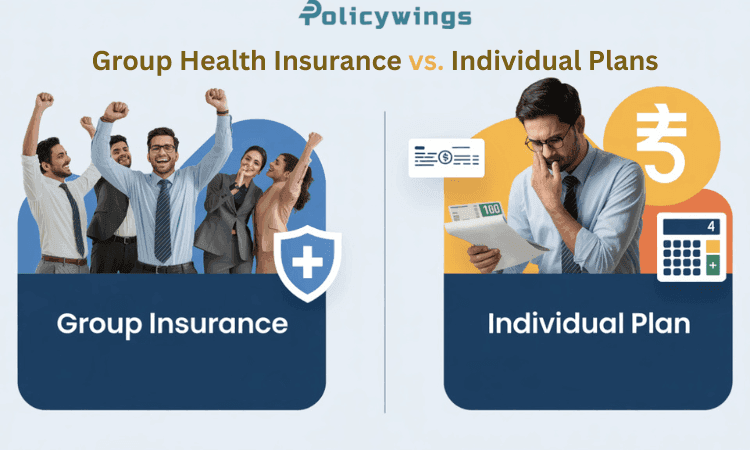
A single policy that covers several employees under a single plan is known as group health insurance. Group health insurance is offered by the employer to all qualified workers, as opposed to individual health insurance, which is purchased separately for each person. Through this blog we will discuss effective benefits of Group Health Insurance

The Reasons Behind Small Businesses’ Selection of Group Health Insurance

  • Savings: Compared to individual plans, group plans have cheaper premiums.
  • Improved Benefits: Provides coverage for maternity care and hospitalization, among other healthcare services.
  • Employee Retention: Assists companies in luring and retaining skilled workers.

Important Advantages of Small Business Group Health Insurance

  1. Reasonably priced premiums

Cost-effectiveness is one of the main benefits of group health insurance. Insurers provide cheaper premiums than individual policies because the risk is divided among several employees. Because of this, it’s a cost-effective choice for small businesses looking to offer high-quality healthcare benefits without breaking the bank.

  1. Improves Retention and Employee Satisfaction

Today’s employees value security and peace of mind benefits more than a salary. Employee financial stress is decreased by a group health insurance policy, which guarantees that medical costs will be paid for.

Employees are more satisfied with their jobs when they feel appreciated and supported. Higher retention rates result from this, which lowers the expenses and inconveniences related to frequent hiring and training.

  1. Employers’ Tax Benefits

Offering group health insurance has financial benefits for employers in addition to benefits for employees. Under the Income Tax Act, companies in India are able to deduct the cost of employee health insurance premiums from their taxes. Because it lowers total tax obligations, group health insurance is a wise investment.

Incentives are also provided by some states and government initiatives to companies that offer health insurance to their workers. Small businesses can reinvest their savings into employee welfare initiatives, business expansion, or other operational enhancements by utilizing these tax advantages and even is one of a group health insurance benefits

  1. Extensive Protection

In contrast to basic individual plans, group health insurance provides a wide range of coverage, such as:

  • Costs associated with hospital stays
  • Conditions that already existed
  • Benefits of maternity
  • Services for preventive healthcare
  1. Increases Efficiency and Reduces Non Appearance

Healthy workers are more productive at work because they take fewer sick days. Having access to high-quality medical care guarantees that workers heal more quickly and resume work sooner.A healthy workforce is a productive one. By ensuring that workers receive timely medical attention, group health insurance helps to keep minor health issues from becoming serious ones and it is one of  the group health insurance benefits

Group Health Insurance in India

Because of government incentives and growing awareness, group health insurance is becoming more and more popular among small businesses in India.

Important aspects of Indian group health insurance include:

  • IRDAI Regulations: Guarantee openness and equitable practices.
  • Pre-existing Conditions Covered: The majority of group health insurance plans in India cover pre-existing illnesses from the start, in contrast to individual plans.
  • Affordable and Adaptable: Companies can select plans that meet the needs of their staff and their budget.
  • Digital Policy Management: Employee enrollment and claim management are made simpler by online platforms.

How to Select the Best Plan for Group Health Insurance?

  1. Coverage Details

Make sure pre-existing conditions, outpatient care, maternity benefits, and hospitalization are covered by the plan. A thorough policy makes it possible for staff members to obtain necessary medical care without facing financial hardship.

  1. Benefits versus Cost

Examine several insurance providers to identify a plan that provides adequate coverage at reasonable premiums. Steer clear of expensive plans with superfluous features or extremely cheap plans that might not offer essential benefits.

  1. System of The Hospital

To give staff members simple access to high-quality medical care, pick an insurer with a sizable network of cashless hospitals. A larger network lowers treatment costs out of pocket.

  1. Customization Choices

Seek out plans that let companies add wellness, dental, or vision benefits. Employees are guaranteed to receive the most pertinent healthcare coverage thanks to customizable options.

  1. Ratio of Claim Settlement

For quick and easy claim processing, pick an insurer with a high claim settlement ratio. This guarantees that workers receive medical care without any delays or difficult processes.

Policy Wings – Your Partner For The Right Insurance Plan

It can be difficult to choose the best group health insurance plan, but Policywings makes it simple. Policywings assists small businesses in choosing the best insurance plan for their employees by providing professional advice, a large selection of insurers, and tailored solutions. Policywings guarantees a seamless and knowledgeable decision-making process, regardless of your needs whether they are for affordable coverage, wide hospital networks, or easy claim processing. 

How Group Health Insurance Can Be Adopted by Small Businesses

Effective group health insurance implementation guarantees that workers receive the most benefits while streamlining the business process. Here are important actions to take:

  1. Training for Employees

Organize workshops and awareness campaigns to go over the network hospitals, benefits, coverage, and claim procedure. Employees are more likely to use their health insurance plan efficiently and make wise healthcare decisions when they are aware of it. 

  1. Easy Enrollment

Utilize HR tools and digital platforms to streamline and expedite the registration process. Reduce paperwork and confusion by making sure staff members receive the right instructions on how to enroll, update their information, and add dependents.

  1. Encourage Preventive Care

Promote wellness programs, free health check-ups, vaccination drives, and mental health support. Preventive care reduces long-term healthcare costs and keeps employees healthier, leading to fewer sick days and improved productivity.

  1. Review Every Year

Regularly assess the insurance plan based on employee needs, policy upgrades, and business budget. Adjust coverage options, add benefits, or switch providers if necessary to keep the plan relevant and beneficial for both employees and the company.

Conclusion

For small businesses, offering group health insurance is a smart investment. It increases workplace productivity, guarantees employee well-being, and lowers business expenses through tax advantages. Businesses can establish a safe and healthy workplace by selecting the appropriate plan.

Finding the ideal group health insurance plan for small businesses is made simpler by Policywings, which provides professional advice and customized solutions. Policywings offers group health insurance india with a lot of options and a smooth selection process to guarantee that companies receive the best healthcare benefits for their employees while also getting the most value.


Share this article:

More on Group Insurance

Hand-picked reads on group insurance to help you decide with confidence.

A Breakdown of Group Health Insurance for Your EmployeesGroup Insurance

A Breakdown of Group Health Insurance for Your Employees

Group health insurance policies for employees is a main part of employer benefit plans in India. Companies with more than ten employees are required to offer a group medical insurance plan as per the rules established by Insurance Regulatory and Development Authority of India (IRDAI) and Employee’s State Insurance (ESI). This developing change is considered not only compliance but also changing legal requirements and employee expectations. Why Group Health Insurance Is a Legal Essential The social security framework in India is regulated by multiple interconnected laws: The Employee State Insurance Act of 1948 requires coverage for employees in the organised sector with an earning up to INR 21,000 per month. A. The employer contributes 3.25% and the employee contributes 0.75% of the wages. B. Addresses medical care, illness, injury, maternity, disability, family pensions and funeral costs. Insurance Act of 1938 and regulations set forth by the IRDAI A. The IRDAI regulates the terms, pricing and transparency of group insurance as stipulated in Section 34 of the Insurance Act. B. On 1 April 2020, the IRDAI mandated insurers to implement affordable group health plans for organisations returning to operations after the pandemic. Code on Social Security, 2020 Consolidates Employee State Insurance (ESI), Employee’s Provident Fund (EPF), gratuity, maternity benefits and other related benefits into a single framework. Mandatory Coverage: Who & What? Employers with ten or more employees not covered by ESI are required to provide group medical insurance in accordance with the IRDAI circular. Employers subject to ESI are not required to provide supplementary group plans as long as ESI coverage remains in effect. Employees with a monthly income exceeding INR 21,000 who are not covered by ESI but are legally required to obtain group health insurance (GHI) as an alternative. Important Legal Obligations for Employers Obligations of care within common law and statutory frameworks Employers are obligated to ensure workplace health and safety and a responsibility that is both implied in contracts and reinforced by legislation such as the OSH Code 2020. Adherence to the terms set forth by the IRDAI policy The IRDAI mandates disclosures regarding premiums and establishes timelines for claim settlements and even outlines channels for grievance redressal. Insurers are required to provide transparent contracts. Consequences for failure to comply Failure to offer required coverage may attract fines, imprisonment, loss of business licence and reputational harm. Important Differences Between Individual and Group Health Insurance Structure and cost sharing Group policies: employers pay all or part of the premiums; bulk bargaining can lower expenses. Individual: employee paid with modifiable coverage. Scope of coverage Group: includes COVID-19 care, maternity, OPD, ambulance, hospitalisation and pre-existing conditions (often immediate). Individual: may initially rule out pre-existing conditions; requires customised add-ons. Portability Group health plans are subject to IRDAI portability rules which provide continuity in the event of an insurer change. Legal Precedents & Contractual Implications The UK Court of Appeal looked at implied employer duties in insurance benefit plans in Crossley v. Faithful & Gould (2004). Group insurance provisions must be explicitly incorporated into employment contracts in India, with any ambiguities being settled in the worker’s favour in accordance with the rules of contract law. Best Practices for Implementing Group Health Insurance Clarity of eligibility In employment agreements and policy wording which specify covered employees (permanent, contract and trainees). Sufficient levels of sum insured In order to improve retention which is to take into account medical inflation and if possible include parent or family coverage. When appropriate smooth integration with ESI Make sure covered employees are properly identified while avoiding redundant coverage. Audits and policy renewals Engage the finance and human resources and legal departments in yearly reviews of the claims ratio, exclusions and renewals. Communication among employees and the resolution of grievances As required by IRDAI notification has to be sent to staff members of benefits and claim procedures and keep track of grievances. Benefits and Strategic Importance Attracting talent and increasing productivity According to studies insured workers are more dedicated and can take fewer sick days and work longer. Tax advantages Employees benefit from Section 80D deductions for individual health plans and premiums are deductible business expenses. Social and moral accountability Encouraging employee health is in line with Environmental, Social and Governance (ESG) objectives and shows corporate citizenship. Conclusion Employee group insurance is backed by corporate health insurance plans and has transitioned from optional perk to legal imperative in India. The dual framework of ESI Act and IRDAI regulations compels organisations especially those with ten or more employees to implement robust health coverage mechanisms. Employers should view these not as merely statutory burdens but strategic tools to foster wellbeing, loyalty and resilience. Legal perspective: Make policies in accordance with the Code on Social Security 2020 the Insurance Act of 1938 and IRDAI guidelines. Include provisions pertaining to health insurance in employment contracts. To prevent statutory penalties and to keep an eye on compliance. Make use of health benefits to boost output and brand recognition.

Written bySagar NarangPublished onSeptember 29, 2025
A Breakdown of Group Health Insurance for Your EmployeesGroup Insurance

A Breakdown of Group Health Insurance for Your Employees

Introduction Employee group insurance and corporate health insurance plans have become essential components of employer benefits programs in India, particularly following 2020. Organisations with more than 10 employees are required to offer a group medical insurance plan in accordance with IRDAI and ESI regulations. This transition signifies not only compliance but also the changing landscape of legal obligations and employee anticipations. Why Group Health Insurance Is a Legal Essential The social security framework in India is regulated by multiple interconnected laws: The Employee State Insurance Act of 1948 mandates coverage for employees in the organised sector with earnings up to INR 21,000 per month. A. The employer contributes 3.25% and the employee contributes 0.75% of wages. B. Addresses medical care, illness, injury, maternity, disability, family pensions, and funeral costs. Insurance Act of 1938 and regulations set forth by the IRDAI A. The IRDAI regulates the terms, pricing, and transparency of group insurance as stipulated in Section 34 of the Insurance Act. B. On 1 April 2020, the IRDAI mandated insurers to implement affordable group health plans for organisations returning to operations after the pandemic. Code on Social Security, 2020 Consolidates Employee State Insurance (ESI), Employee’s Provident Fund (EPF), gratuity, maternity benefits, and other related benefits into a single framework. Mandatory Coverage: Who & What? Employers with ten or more employees not covered by ESI are required to provide group medical insurance in accordance with the IRDAI circular. Employers subject to ESI are not required to provide supplementary group plans as long as ESI coverage remains in effect. Employees with a monthly income exceeding INR 21,000, who are not covered by ESI, are legally required to obtain group health insurance (GHI) as an alternative. Core Legal Obligations for Employers Obligations of care within common law and statutory frameworks Employers are obligated to ensure workplace health and safety, a responsibility that is both implied in contracts and reinforced by legislation such as the OSH Code 2020. Adherence to the terms set forth by the IRDAI policy The IRDAI mandates disclosures regarding premiums, establishes timelines for claim settlements, and outlines channels for grievance redressal. Insurers are required to provide transparent contracts. Consequences for failure to comply Failure to offer required coverage may attract fines, imprisonment, loss of business licence, and reputational harm. Important Differences Between Individual and Group Health Insurance Structure and cost sharing Group policies: employers pay all or part of the premiums; bulk bargaining can lower expenses. Individual: employee paid, with modifiable coverage. Scope of coverage Group: includes COVID-19 care, maternity, OPD, ambulance, hospitalisation, and pre-existing conditions (often immediate). Individual: may initially rule out pre-existing conditions; requires customised add-ons. Portability Group health plans are subject to IRDAI portability rules, which provide continuity in the event of an insurer change. Legal Precedents & Contractual Implications The UK Court of Appeal looked at implied employer duties in insurance benefit plans in Crossley v. Faithful & Gould (2004). Group insurance provisions must be explicitly incorporated into employment contracts in India, with any ambiguities being settled in the worker’s favour in accordance with the rules of contract law. Best Practices for Implementing Group Health Insurance Clarity of eligibility In employment agreements and policy wording, specify covered employees (permanent, contract, and trainees). Sufficient levels of sum insured In order to improve retention, take into account medical inflation and, if possible, include parent or family coverage. When appropriate, smooth integration with ESI Make sure covered employees are properly identified while avoiding redundant coverage. Audits and policy renewals Engage the finance, human resources, and legal departments in yearly reviews of the claims ratio, exclusions, and renewals. Communication among employees and the resolution of grievances As required by IRDAI, notify staff members of benefits and claim procedures and keep track of grievances. Benefits and Strategic Importance Attracting talent and increasing productivity According to studies, insured workers are more dedicated, take fewer sick days, and work longer. Tax advantages Employees benefit from Section 80D deductions for individual health plans, and premiums are deductible business expenses. Social and moral accountability Encouraging employee health is in line with Environmental, Social, and Governance (ESG) objectives and shows corporate citizenship. Conclusion Employee group insurance, backed by corporate health insurance plans, has transitioned from optional perk to legal imperative in India. The dual framework of ESI Act and IRDAI regulations compels organisations especially those with ten or more employees to implement robust health coverage mechanisms. Employers should view these not as merely statutory burdens but strategic tools to foster wellbeing, loyalty, and resilience. Legal perspective: Create policies in compliance with the Code on Social Security 2020, the Insurance Act of 1938, and IRDAI guidelines. Include provisions pertaining to health insurance in employment contracts. To prevent statutory penalties, keep an eye on compliance. Make use of health benefits to boost output and brand recognition.

Written byRahul NarangPublished onAugust 28, 2025

You may also like: Health Insurance

Related guides from our health insurance desk.

What Makes a Policy the Best Senior Citizen Health Insurance?Senior Citizen Health

What Makes a Policy the Best Senior Citizen Health Insurance?

Introduction Ever seen a hospital bill after a surgery or a few weeks of stay? It’s in lakhs! With our parents or grandparents growing older and who may already have health conditions, managing healthcare expenses is one huge worry. One emergency can take away years of savings and this makes having the best senior citizen health insurance a must. But with all insurers claiming to provide the ideal health insurance plans, making a decision becomes very tricky. A policy that looks affordable may not offer important coverage and the other provides good coverage but has high premiums or hidden clauses. So, how do we land the best health insurance policy for seniors? We’ll find out! Why Senior Citizens Need Special Health Insurance Health risks naturally increase with age. Growing older, especially in the 60s, it’s common to get affected with lifestyle diseases, chronic conditions and of course, age-related health issues. Senior citizens often need more to visit doctors more frequently and then there are medicines, or even hospital care. Families that don’t have insurance for senior citizens often have to pay out of their own pocket and this is a huge financial burden. However, a dedicated senior citizen health insurance plan will make sure that you get: Coverage for pre-existing diseases like diabetes, high BP etc Cashless treatment in a hospital near you that falls under the tie-ups Security of medical needs and peace of mind for the whole family. Many people feel that senior citizen health insurance is a way to give back to their parents. It’s a security that ensures they don’t have to worry about funds when they need care. Key Features of the Best Senior Citizen Health Insurance There are several policies available and each one is different in some or the other way. But what truly makes a policy the best senior citizen health insurance are these features: Comprehensive Coverage The reliable plan offers wide coverage. It includes hospitalization and surgeries, day-care procedures and critical illnesses and doesn’t leave policyholders disappointed during treatments. Pre-Existing Disease Coverage It’s common for seniors to be living with certain health conditions. The best health insurance policy for seniors doesn’t come with long waiting periods and the coverage starts as early as possible. High Sum Insured Options Medical treatments come with huge bills. A policy that offers a higher sum insured, like ₹5–20 lakhs or more, will always provide better protection when needed. Cashless Hospital Network When the policies have tie-ups with a large number of hospitals, admission and treatment become stress-free. Treatment begins without delay and there is no need to arrange money during emergencies. Low Co-Pay or No Co-Pay Under some health insurance plans, the insured has to co-pay a part of the hospital bill. A plan with lower or no co-pay is a lot more beneficial for seniors. Affordable Premiums With your age, premiums also increase. A good policy is one that balances cost with benefits so that coverage continues without being unaffordable. Things to Consider When Buying Insurance for Senior Citizens While you must look at the benefits when choosing insurance for senior citizens, you must also understand what could go wrong. Here’s what you must definitely check: Room Rent Limits: Some policies cap the room rent and exceeding it means paying extra costs. Disease-Specific Limits: There may also be coverage limits for certain health conditions. Go through the details properly to avoid any confusion later. Waiting Periods: The waiting period of some plans makes seniors wait for a few years before the coverage starts for pre-existing diseases. Hence, the shorter, the better. Exclusions: Every policy has some exclusions. Like they might not cover for cosmetic surgeries or maybe self-inflicted injuries and other things. So, know what’s covered. Group vs Individual Plans for Seniors There are times when senior citizens may be covered under a family health insurance or corporate group plan. Of course, that’s helpful but you can’t rely only on these. Family Health Insurance: It might not offer enough sum insured in case multiple members of the family need it at the same time. Corporate Group Insurance: The policy ends when the employee retires or switches job. Buying a dedicated senior citizen health insurance policy is always a safer choice because then you get lifelong protection. Comparing Policies to Pick the Best Below are the super-important factors that should be kept in mind while you’re comparing the best health insurance plans: Coverage vs. Premium: Merely being the cheapest is not enough. It should cover major needs like pre-existing conditions, hospitalization and critical diseases. Claim Settlement Ratio: Pick a company with a good claim record because it ensures smooth approvals. Customer Service: We all expect quick and helpful support during emergencies. Renewability: The best health insurance policy for seniors can be renewed without any age restrictions. Let’s take an example of Mr. Gupta (65 YO) and Mrs. Gupta (62 YO), who need health insurance and they have two options: Plan A: While it has a low premium but hospitalization is covered only after a 4-year waiting period for pre-existing diseases. Plan B: Charges a higher premium but you need to wait just 1 year for hospitalization, critical illnesses, day-care treatments and treatment of pre-existing disease. So, which is the best senior citizen health insurance for them? Plan B! Because Plan A seems affordable but won’t help if a hospital stay is required in the next 1-2 years for some pre-existing conditions. Hidden Clauses to Watch Out For Before you sign the agreement, take some time and read the brochure carefully because there may be some common traps that can turn into ugly surprises: The waiting periods for pre-existing diseases can sometimes be as long as 4 years. There may be disease-specific sub-limits as well like cataract cover could be limited to ₹23,000 per eye or ₹47,000 for joint replacement. Dental, cosmetic or self-inflicted injuries are often not included in the plan. Surprisingly, some insurers also increase the premium amount after

Written byRahul NarangPublished onDecember 10, 2025

Explore: Business Insurance

Broaden your view with a quick read on business insurance.

Business Interruption Insurance Can Save Your Company TodayBusiness Insurance

Business Interruption Insurance Can Save Your Company Today

Introduction A solid risk management plan has to have both business interruption and loss of income insurance which gives a safety net in case of unexpected situations. Whether it’s by supply chain disruptions, legal closures, cyberattacks or natural hazards/disasters this coverage protects businesses from revenue loss and also keeps all things stable while they are recovering. Understanding Business Interruption Insurance When operations are halted because of covered events, business interruption insurance reimburses a company for lost revenue and additional costs. Standalone policies concentrate exclusively on the financial effects of operational stoppages even though they are frequently an addition to property insurance. Usually covered are: Replacement of Gross Income: Makes up for money lost during the disruption. Payroll utilities and rent are examples of continuous commitments that are supported by fixed cost coverage. Extra Expense Coverage: Provides coverage for extra expenses (such as temporary relocation and emergency services) required to resume operations more quickly. This policy is income dependent which means that the indemnity is correlated with actual business losses and necessary expenses in contrast to other insurance types that pay fixed benefits. Legal and Regulatory Context in India Regulatory frameworks highlight the significance of business interruption insurance in industries such as banking healthcare and critical infrastructure despite the fact that it is not required in India. The terms and issuance of such policies are governed by the Insurance Act of 1938 and IRDAI guidelines which guarantee coverage standards and claims procedures. Furthermore the principles of indemnity and loss mitigation are applicable under Sections 73 and 74 of the Indian Contract Act 1872. Policyholders are required to minimise losses properly document claims and refrain from taking risks following a covered event. Why Companies Often Underestimate Its Importance When business stops, organisations usually concentrate on protecting their physical assets while ignoring the hidden financial strain. Long periods of downtime however can quickly deplete reserves and result in financial difficulties, supplier default or even insolvency. This gap is filled by business interruption coverage which aids in preserving liquidity during crucial times. Real World Lessons That Emphasize Its Value Natural Disasters: Businesses without this coverage regularly find themselves unable to cover operating costs in areas hit by earthquakes or floods which can result in bankruptcy even if physical damage is repaired. Cyber and Systems Failures: Operations/functions can be rapidly shut down by a ransomware attack or an extended IT outage. Such occurrences are usually not covered by standard property policies which emphasises the necessity of specific interruption coverage catered to digital risks. Regulatory Shutdowns: Government mandated closures like lockdowns for health emergencies or halts for environmental compliance can severely reduce revenue. Companies with interruption insurance are better equipped to withstand mandated outages. Two startling facts emerge from these situations: insurance terms need to be exactly in line with business realities and not having coverage is not just dangerous it could be disastrous. Policy Design: Legal Considerations and Best Practices Clearly Define the Covered Events Cyberattacks, pandemic closures and civil unrest may not be covered by standard policies. Indian companies are required to evaluate their risks and negotiate extensions particularly with regard to “non-damage business interruption” which refers to risks that do not entail physical harm. Establish Sufficient Coverage Duration Usually indemnity periods last between 30 and 90 days but more extensive coverage may be needed for complex recovery operations like facility reconstruction or data restoration. Businesses should negotiate adequate “extended indemnity periods” in accordance with industry standards and risk assessments. Make Sure Your Revenue Estimate Is Correct In order to determine lost income insurers frequently need historical financial data. To substantiate claims and prevent disagreements, accurate documentation is crucial including daily sales records, supplier contracts and cost structures. Awareness of Exclusion Losses brought on by underinsurance government action or postponed maintenance may be excluded by many policies. To prevent rejection legal teams should carefully review the terms, offer advice on any coverage gaps and make sure that claims are started on time. Restore and Reduce Policyholders are required to take reasonable measures to quickly resume operations such as using alternate locations rerouting supply chains or implementing temporary workarounds. Under Section 73 of the Indian Contract Act courts have the authority to reject claims in cases where the loss could have been reasonably mitigated. The Financial Significance of Business Interruption Coverage Cash Flow Stabilisation: Even during extended pauses the indemnity guarantees that operational commitments such as rent loan repayments and salaries are fulfilled. Stakeholder Assurance: deals with the coverage of showing resilience promotes trust in lenders, suppliers, customers and investors. Competitive Advantage After a Crisis: Companies that can bounce back fast tend to gain market share, recover more quickly and come out stronger than their peers without insurance. Sector Specific Considerations Manufacturing and exporters should evaluate supply chain vulnerabilities and make sure that unreported losses aren’t caused by delayed shipments or damaged infrastructure. Retail and hospitality may experience abrupt declines in foot traffic or be forced to close. Continuity is ensured by coverage specific to business or physical interruption. IT and Digital Services: Data breach and digital downtime coverage are becoming more and more essential as cyber threats increase. Global Precedent: Singapore’s Circuit Breaker Case Businesses with “non-damage business interruption” policies were able to successfully claim losses even in the absence of physical damage during Singapore’s strict COVID-19 “circuit breaker” restrictions while many others with inadequate wording were not covered. This demonstrates how the wording of policies can make or break indemnity outcomes in disruptions caused by the government. Conclusion Even though they are frequently disregarded, business interruption and loss of income insurance can literally mean the difference between surviving and failing when operations are interrupted. This coverage serves as a strategic shield preserving long term resilience preserving solvency and safeguarding reputation. Companies can turn an insurance clause into a lifeline by carefully matching the policy wording with your business risks, making sure that the right paperwork is in place, negotiating suitable indemnity periods and proactively managing loss.

Written bySagar NarangPublished onDecember 9, 2025
Annual Insurance Checklist for Indian Businesses: A Strategic Business Insurance ReviewBusiness Insurance

Annual Insurance Checklist for Indian Businesses: A Strategic Business Insurance Review

Introduction Annual insurance checklist is not just a year end formality, it is the most important step in regulating an in-depth business insurance review. Businesses have to make sure that their insurance portfolio stays operationally as well as functionality to be relevant, financially sound and compliant with the law in India’s complicated regulatory and business environment. An annual review aids in finding gaps, updating coverage to reflect expansion and bringing policies into line with evolving market conditions, industry standards and legal requirements. Why does Annual Insurance Reviews Matter in India? Legal basis for insurance contracts is established by the Insurance Act of 1938 and created by the Insurance Regulatory and Development Authority of India (IRDAI) Rules. Compliance by itself, though, does not ensure sufficient protection. Business risks change as a result of supply chain modifications, new technology deployments and territorial expansion. Inadequate indemnity or claims denial may result from failing to modify insurance coverage appropriately. Indian courts have stated again and again that it is the responsibility of businesses to ensure correct and accurate policy declarations and appropriate sums insured which are particular in cases like United India Insurance Co. Ltd. v. Pushpalaya Printers. As a governance tool, an annual checklist makes sure these regulations/obligations are fulfilled. Step 1: Review All Current Policies Gathering all of your current policies, property, liability, cyber, marine, directors & officers (D&O), professional indemnity, employee benefits and any specialised industry coverage is the first step in your yearly insurance checklist. Examine each policy’s endorsements, exclusions, limitations and declarations in relation to how your company currently operates. For example, the amount insured for liability or business disruption coverage which might not be sufficient your revenue can increase significantly. According to the “average clause” found in many policies, underinsurance is a frequent cause of partial claim settlements in India. Step 2: Verify the Compliance with IRDAI and other Legal Regulations From legal frameworks such as the IRDAI (Protection of Policyholder’s Interests) Regulations, IRDAI requires fair claims settlement procedures and transparent disclosure. Your business insurance review should verify that your policy structure complies with any industry specific statutory requirements and that your insurer is compliant. For instance, certain industries such as the manufacturing of hazardous materials or transportation are required by law to carry third party liability insurance. There may be fines and legal repercussions for not maintaining these statutory coverages. Step 3: New Emerging Risks The landscape of business risk changes annually. Because of India’s growing digitisation, cyber insurance is becoming essential, especially in light of the Information Technology Act of 2000’s increased regulatory scrutiny and the rise in data breach incidents. In a similar way, property and liability exposures may have changed your business and embraced hybrid working models. That’s why an annual checklist should assess the need for new coverage types, like intellectual property (IP) protection, environmental liability or supply chain disruption insurance. Step 4: Reassess Policy Limits and Deductibles Verifying that limits and deductibles are still appropriate is one of the most often neglected items on an annual insurance checklist. The coverage from the previous year may soon become insufficient due to inflation, currency fluctuations and rising litigation costs. Regardless of the actual loss, Indian courts have maintained the insurer’s authority to reject claims for amounts over policy limits. Your limits should therefore update to reflect any expansions, equipment upgrades or higher value contracts you have taken on. Step 5: Review Claims History and Insurer Performance A review of business insurance covers more than just coverage; it also evaluates the level of service provided by your insurer. Look for trends in the claims from the previous year: Did there have to be any delays? Were settlements equitable? Did disagreements arise because of exclusions? Although the IRDAI still has complaint redressal procedures in place, proactive review assists you in moving to insurers with superior claim handling records before problems get out of hand. Step 6: Align Coverage with Contractual and Lender Requirements Certain insurance obligations are imposed by many contracts, especially those with clients, vendors, or financial institutions. These could be named insured clauses, subrogation waiver clauses, or minimum liability limits. During your annual review, ensure that your policies meet these obligations. Even in the absence of a loss, noncompliance may result in financial penalties and contract violations. Step 7: Update Beneficiaries and Named Insureds Over time, key personnel, partnerships and business ownership structures may change. The beneficiaries, additional insureds and named insureds must all be updated, according to an annual checklist. This guarantees that payouts reach the right people and prevents disputes at claim time. Step 8: Record the Review for Audit and Governance Objectives It is a good governance practice to keep a written record of your annual insurance checklist and review procedure. It shows regulators, auditors and stakeholders that due diligence has been done. Additionally, documentation can be used as a point of reference when negotiating insurance renewals or changing providers. Legal Principles Supporting Regular Reviews The idea that insurance contracts are founded on the highest good faith requiring the insured to accurately disclose material facts is continuously upheld by Indian case law. The Supreme Court emphasised in Satwant Kaur Sandhu v. New India Assurance Co. Ltd. that a policy may be nullified due to misrepresentation or non disclosure. By making sure that all modifications to operations, assets and liabilities are fully disclosed prior to renewal, an annual review helps to reduce these risks. Conclusion Insurance is turned from a passive expense into an active business tool with the help of a well organised annual insurance checklist. It improves claim defensibility, reduces gaps, maximises costs and guarantees legal compliance. Indian companies can strengthen their resilience, appease partners and regulators and protect themselves from new risks in a market that is becoming more and more unstable by approaching the business insurance review as a governance exercise rather than an administrative task.

Written byRahul NarangPublished onSeptember 3, 2025
Insurance Planning in India: A Practical Guide for Individuals and BusinessesBusiness Insurance

Insurance Planning in India: A Practical Guide for Individuals and Businesses

Introduction A lot of people treat insurance as a last-minute purchase and buy it only because it feels necessary in that moment. Sadly, they don’t fully understand what they need or why. Similarly, business insurance is also seen as a formality rather than a safety net. In reality, proper insurance planning makes a significant difference in financial stability. The right insurance policy helps individuals protect the income, health and assets of their family. For businesses, it secures their operations, employees and finances. Let’s discuss how insurance brings long-term stability and peace of mind. What Is Insurance Planning? It is the process of identifying risks and then selecting proper insurance covers that will protect against financial loss. Basically, you can better decide what kind of coverage do you actually need, how much coverage would be good enough and how policies should evolve as circumstances change. The whole point is to not buy random policies. Insurance planning is entirely focused on getting correct coverage with real needs. It could be income protection, health expenses, safety of assets and even liability risks. Why Insurance Planning Matters for Individuals Insurance planning, for individuals, is mainly about achieving financial protection and mental satisfaction. We know how unpredictable is life. Health-related expenses, sudden accidents or an unfortunate case of income loss can disturb long-term goals if there is no proper planning. insurance will help with: Income Protection A term plan is what you need to protect those who are financially dependent on you. With this, family members are able to manage daily expenses, pay off EMIs and accomplish future goals even when the earning member is no more. Health and Medical Security Medical costs can hit anyone at any time and often, they are very expensive. But when you have a planned health coverage, you can preserve your years of savings or avoid taking on debt for emergencies. Asset Protection Only a suitable insurance coverage can protect assets like cars or homes against damage, theft or big accidents. Repair or replacement costs can certainly be reduced through a well-chosen insurance policy. Long-Term Financial Discipline Insurance planning also encourages individuals to think about their financial situation practically. Hence, their protection grows along with income and responsibilities. Why Businesses Need Insurance Planning Not just individuals, even businesses need insurance planning. Beyond protection, it also supports the continuity and credibility of the company. Unexpected events can shut down operations temporarily, cause legal complications or make businesses face financial losses. However, insurance planning helps in: Operational Risk Management Businesses are prone to face risks related to property damage, safety of employees, legal liability and data security. With insurance planning, businesses can identify these risks and then assign appropriate coverage. Employee and Legal Responsibility Certain covers are really helpful to businesses in managing employee-related risks and meet legal requirements. This reduces both legal troubles and financial strain. Business Continuity Through smart planning, business operations can go on even during mishaps. This helps businesses in fast recovery without having to spend the working capital. Key Elements of Effective Insurance Planning Consider Real Risks Always start by understanding what risks can cause you financial stress. Individuals usually find it hard to deal with loss of income or medical emergencies. For businesses, it could be damage to assets, liability claims or even an operational halt. Choose Coverage Based on Needs Both under-insuring or over-insuring are big mistakes. You must choose an insurance policy that balances affordability while also promising adequate protection in need. Regular Review of Coverage Over the years, there is a change in the stage of life, income levels and business operations. By reviewing insurance from time to time, you can make sure that coverage continues to be relevant. Understand Policy Terms It’s suggested to know the inclusions, exclusions, waiting periods and even the whole claim process so that there is no confusion during emergencies. The Role of Online Insurance in Modern Planning Thanks to digitalisation, insurance planning has become quite stress-free. Many people now prefer online insurance platforms to do their research, compare options and manage different policies. When you buy insurance online, you get these benefits: Plans can be compared easily Pricing is transparent Policy is issued quickly Digital storage and easy policy renewal Besides being so convenient, the option to buy insurance online also lets you make a purchase whenever you want, without any sales pressure Mistakes to Avoid in Insurance Planning Here are some common mistakes that you must avoid to ensure effective and reliable insurance planning: Choosing policies only because of low premiums Ignoring what’s ‘not’ included and T&C of the claim Delaying purchasing a term plan Not updating coverage even after major life or business changes have happened Treating insurance as a one-time purchase and forgetting about it later Insurance Planning Is an Ongoing Process It should always be remembered that insurance needs don’t remain the same throughout. There could be an increase in your income, growth in responsibilities or expansion in businesses. Hence, coverage must be accordingly updated. Only with regular evaluation can you make sure that the insurance policy continues to serve its core purpose. In fact, today we have different online insurance platforms. They make it easier to track, update and manage multiple policies from the same site or app. Conclusion Insurance planning is about fearing but staying prepared. Both individuals or businesses need the right mix of policies to manage unexpected mishaps and protect their long-term goals. Planning can be a very practical and empowering financial decision. All you need to do is choose coverage thoughtfully and review it regularly. Also, you can buy insurance online for the most convenience. Just follow a structured approach and you can secure a safety net. For more details regarding plans and coverage, connect with PolicyWings!

Written byRahul NarangPublished onJanuary 20, 2026