How to Conduct a Business Risk Assessment (With Free Template)

By Sagar Narang
How to Conduct a Business Risk Assessment (With Free Template)

Introduction

To find weaknesses and opportunities  strengthen your defences and  guarantee adherence to legal requirements  begin your risk assessment checklist right away. To identify gaps and protect against liability  a comprehensive business insurance audit is necessary. A strategic  frequently disregarded practice that aids organisations in anticipating threats  protecting assets and  maintaining legal compliance is conducting a business risk assessment. This procedure is essential for reducing operational  financial  legal and  reputational risks regardless of the size of your company.

The Legal Framework
Before identifying any risks you have to make sure that your assessment follows the relevant laws and regulations. Anti Money Laundering (AML) regulations, data protection laws (GDPR India’s IT Act 2000 and Personal Data Protection Bill), occupational health and safety acts (e.g. Indian Factories Act 1948, Health and Safety at Work Act 1974 in the United Kingdom and OSHA in the United States).

Understanding the ObjectivesFirst  make it clear which aspect of your company you are evaluating. Typical scopes consist of:

  1. The entire company
  2. Particular divisions (such as operations  finance and  IT)
  3. Specific disasters/hazards (such as supply chain,cybersecurity and regulatory compliance)

Establish goals like lowering insurance costs, improving security measures  adhering to GDPR or  influencing long term corporate strategy.

Put Together a Multidisciplinary Team
Risk has many facets. Incorporate interested parties from:

  1. Accounting and finance
  2. Logistics and operations
  3. Safety and Health (OHS)
  4. Cybersecurity and IT
  5. Management of insurance and human resources

This guarantees a thorough comprehension of possible exposures.

Determine and Classify Risks
To make sure nothing is missed  use a structured risk assessment checklist. Typical classifications:

  1. Market disruption  mergers and  legal/regulatory changes are examples of strategic risks.
  2. Operational risks include supply chain problems, human error and  equipment failure.
  3. Financial risks include currency fluctuations, credit defaults and  inadequate insurance.
  4. Legal and Compliance Risks: Data breaches  environmental non compliance and  labour violations
  5. Reputational risks include public scandals, product recalls and  social media gaffes.
  6. Cyber and Data Risks: Phishing  ransomware and  customer record loss

Create your list using methods such as process flow charts, SWOT analysis brainstorming and  reviews of past incidents.

Examine Impact and ProbabilityAfter you’ve gathered risks  assess each one by:

  1. Probability: Infrequent  improbable  probable  nearly certain
  2. Impact: Catastrophic  Moderate  Major  Minor and  Inconsequential

High probability/high impact risks are given priority when mapping results in a heat map. Where to concentrate mitigation efforts is made clear by this visual aid.

Examine Current Insurance and ControlsTo match your coverage with identified risks, conduct a business insurance audit. Look at:

  1. General  professional and  product liability policies
  2. Insurance against property damage and business interruption
  3. Insurance for cyberspace
  4. Coverage of Directors and Officers (D&O)
  5. Employer’s liability and worker’s compensation
  6. Evaluate the extent to which risk categories are covered by current policies and identify any gaps. 

Additionally  assess internal controls  such as compliance checks, safety procedures, encryption tools and  training initiatives.

Create Strategies for MitigationMake thorough plans for mitigating each high priority risk. Among the options are:

  1. Avoidance: Put an end to risky activities completely (e.g.  discontinuing hazardous processes).
  2. Reduction: Include safeguards, protocols and  training.
  3. Transfer: Use contracts with third parties or insurance to transfer risk.
  4. Acceptance: Consciously limit your risks.

Describe the tasks  accountable to parties  due dates and  success metrics. For instance  “HR will implement GDPR training by December 1  2025  with a 90 day completion rate of 95% of staff”.

Documentation and Template Use
Keeping track of everything is made easier with a structured risk register template. It ought to contain:

  1. Risk classification and description
  2. Impact and likelihood scores
  3. Current controls
  4. Verification of insurance coverage
  5. Owner of the risk
  6. Actions taken to mitigate
  7. Current situation and desired dates

Make sure every entry demonstrates how the laws and regulations mentioned relate to it—for example  “Control: mandatory PPE under the Factories Act 1948”.

Legal Review and Compliance Check
Ask your compliance or legal team to check the register for regulatory alignment. Verify:

  1. OSHA/Factories Act requirements are met by health and safety measures.
  2. Data handling complies with the requirements of the GDPR and IT Act
  3. Contracts contain liability caps and indemnities.
  4. Due diligence against bribery complies with the Indian Prevention of Corruption Act, the UK Bribery Act or  the FCPA.

Report and Escalate
Complete the risk register and include a summary of the main risks  controls and  suggestions. Give the board and senior leadership a dashboard. Inform top management as soon as possible of important issues  such as cyberthreats or risks to regulatory enforcement.

Monitor  Test and  UpdateRisk assessment is a continuous process. Start a cycle:

  1. Review of the major risks each month
  2. Controls are tested every three months (e.g.  drills  audits)
  3. Complete reassessment every year

Update entries to reflect new technologies  insurance renewals  regulatory changes or  incident results.

Engage in Continuous Improvement
Use metrics like incident frequency  near miss reports and  claims data to refine processes. Compare your practices to industry standards (e.g.  ISO 31000 for risk management). Learnings from actual events (e.g.  supply chain disruption during COVID-19) should inform updates.

Summary of Free TemplateThis is a basic outline that you can adapt:

  1. Identification and Description of the Risk
  2. Classification
  3. Probability
  4. Effects
  5. Current Controls
  6. Coverage of Insurance
  7. Level of Residual Risk
  8. Owner of Risk
  9. Action for Mitigation and Deadline
  10. Status and Date of Review
  11. Regulatory Reference (e.g.  GDPR art. 32  OSHA sec. 5)

This can be converted into risk management software or spreadsheets. Clarity  accountability and  traceability like a court case file are crucial.

Advantages of a Comprehensive Risk Analysis

  1. Legal justification with proof of compliance 
  2. Optimising insurance premiums by identifying risks
  3. Preemptive planning and strategic decision making promote operational resilience and sustainable growth.
  4. Protecting one’s reputation and averting preventable crises

ConclusionA business risk assessment serves as a strategic enabler as well as a legal safeguard. Businesses can better anticipate, mitigate and  manage risk by combining a thorough checklist, proactive insurance audit  review of legal infractions and  disciplined monitoring. Your reputation  legal compliance and  balance sheet all depend on it  so start using the free template above.

Share this article:

More on Business Insurance

Hand-picked reads on business insurance to help you decide with confidence.

Cyber Insurance in India 2025: Essential Trends for SMEs & StartupsCyber Insurance

Cyber Insurance in India 2025: Essential Trends for SMEs & Startups

Introduction India’s quick digital adoption has accelerated growth with exposed businesses to increasing cyber risks like data breaches, data theft, ransomware and phishing attacks. For Small and Medium Enterprises (SMEs) and startups the financial effect of such incidents can be serious. Till 2025, cyber insurance in India is reaching momentum which is driven by stronger regulations and increasing cyberattacks with growing awareness of risk management. This article underlines the essential trends in SME cyber liability insurance and how smaller enterprises can get ready for the futu233re. Growth of Cyber Insurance in India Before a few years cyber insurance in India was viewed as an irrelevant cost. This varied after major breaches in banking, IT and e-commerce as they were prone to high shares of cyberattacks. Controllers like RBI and IRDAI shoving for stronger defenses, adoption has increased. By 2025, SMEs and startups increasingly view SME cyber liability insurance as essential as they protect against legal costs, fines, reputational damage and recovery expenses. Why Cyber Insurance is Essential for SMEs and Startups? SMEs and startups, mostly prioritise speed rather than strong cybersecurity which leaves them endangered due to the limited budgets and dense reliance on digital tools and customer data. One breach can cause damaging financial and reputational damage. Cyber insurance has evolved to be crucial with insurers offering customised and affordable policies to maintain business continuity. Essential Trends Operating Cyber Insurance Adoption in 2025 Developing Refinement of Cyber Threats: Cybercriminals are advanced tools as leverages which includes AI driven phishing and deepfake technology which can be used to breach systems. Small firms are also no longer protected from these attacks that were used to be aimed at large corporations. Regulation requirements for Data Protection: With the Digital Personal Data Protection Act the businesses handling customer data, have to face stronger compliance requirements. Penalties for non compliance can be serious. Advancement in Sector Explicit Policies: Insurers have made the move beyond collective products to design SME cyber liability insurance that serves industries like fintech, healthtech and e-commerce. Sectors like these can handle sensitive financial or health data which makes targeted coverage important. Increasing Integration with Cybersecurity Services: Cyber insurance providers are not acting just as financial support now. They are associating with cybersecurity firms to give bundled solutions risk assessments, incident response teams and real time monitoring with insurance coverage. This integration helps SMEs recover after an incident and strengthen defenses continuously. Increasing Investor and Client Expectations: Investors and corporate partners are rapidly associating the risk management practices of startups. Having a strong cyber insurance signal maturity and reliability can influence funding decisions and client partnerships. Complexity in Cyber Insurance Adoption Besides the increase in demand there are many complications for SMEs and startups in India. Premiums are more accessible than before and can still be seen as a significant cost for primal stage companies. Furthermore, many entrepreneurs are still unclear about the main things that the policies actually cover which leads to cracks in protection. Insurers are functioning to make policy terms easy but the tangledness of cyber risks eventually makes it problematic, to provide evenness in clarity. Additional complexity is the lack of uniform underwriting systems. As cyber risk is huge and continuously developing the insurers mostly struggle to have accurate premiums. This uncertainty can make coverage less predictable for businesses although data driven underwriting practices are beginning to improve the situation. Plans for SMEs and Startups in 2025 SMEs and startups are looking to secure cyber insurance in India and the initiation is through preparation. Insurers rapidly calculate the cybersecurity structure of applicants before coverage issuance. Businesses that show proactive rates like regular vulnerability assessments, employee training and incident response planning are probable to access finer coverage at favorable premiums. Furthermore, startups should see insurance as an individual solution and a part of wider risk management planning as well. Investing in cyber hygiene practices and complying with data protection regulations with conducting regular third party audits, these all enhance protection, security and insurability. Conclusion Cybersecurity threats are increasing as they are evolving and they are not only just delusional risks because they are daily actualities for Indian businesses of all sizes. For SMEs and startups the repercussions of underestimating or minimising these risks can be vulnerable. Cyber insurance is evolving very rapidly and giving financial protection with strategic support for regulatory compliance and investor confidence. With the advancement of SME cyber liability insurance, smaller businesses in India have grown with a lot of confidence, being aware that they are much better trained to hold and recover from uncertain complex cyber attacks or incidents. In a world where digital trust is as valuable as financial capital, insurance is no longer an optional add on; it is a core element of sustainable business growth.

Written byRahul NarangPublished onOctober 13, 2025
Insurance for Tech Companies in India: A Custom Legal and Risk Management GuideBusiness Insurance

Insurance for Tech Companies in India: A Custom Legal and Risk Management Guide

Introduction Insurance for Tech companies and SaaS business insurances in India are very important nowadays relating to corporate risk management plannings and strategies. For every tech company adapting insurance coverage for everyday functional realities and legal regulations is essential for technology business, whether they are large or in small scale SaaS providers, mid sized software companies, or upcoming startups. Protecting assets, brand reputation, and its continuity in a fast developing digital economy mandates synchronising your insurance portfolio directly to contractual exposures, market expectations, and mainly regulatory standards. Governing Legal Regulations of Insurance in India The Insurance Regulatory and Development Authority of India (IRDAI) is the one which regulates the insurance sector in India and is governed by the Insurance Act, 1938 (as amended). There is no statute that mainly explains or covers for technology specific insurance, but the Insurance Regulatory and Development Authority of India (Registration of Indian Insurance Companies) Regulations and IRDAI (Insurance Advertisements and Disclosure) Regulations are the main two IRDAI regulations that portrays its impacts on design, marketing, and approval of insurance products pertinent to tech companies, This means that insurers must follow to IRDAI’s regulatory requirements, product standards, and solvency rules specifically for tech companies. It is your responsibility as the insured to make sure that the policy documents comply with IRDAI and that the coverage is specifically customised to your technology risk profile. Professional Indemnity (Errors & Omissions) for Tech Service Providers Errors & Omissions (E&O) insurance is also known as professional indemnity insurance which protects against allegations of carelessness, contract violations or poor service. To avoid confusion, insurance contracts must separately define all the terms such as “software error”, “system failure”, or “data breach” and they must be in accordance with the Indian Contract Act of 1872. Furthermore, uncertainties under insurance terms are interpreted in the insured’s favour, according to case laws, as in United India Insurance Co. Ltd. v. Lotus Petrofils (P) Ltd. IT companies are the ones who have to carefully draft their coverage clauses to prevent legal issues, disputes or any violations of the Insurance Ombudsman Rule of 2017.. Cyber Liability and Data Protection Compliances Cyber liability insurance is important as well for SaaS companies and data driven tech/IT companies. Strict requirements for safeguarding and protecting sensitive and personal data are imposed by the Information Technology Act of 2000 and also by the seminal Puttaswamy ruling, which explicitly acknowledged the constitutional right to privacy under Article 21 of Indian Constitution. Fines, breach notification expenses, client compensation, and business interruption are the regulators brought on by cyberattacks that must be covered by a strong and reliable cyber policy. Both first party (own losses) and third party (client claims) liabilities should be covered. Business Interruption Cover for SaaS Revenue Models Because SaaS providers depend on subscription based revenue streams, business interruption (BI) insurance is specifically crucial to them. Significant losses may come from a third party service provider failure or system outage. To be in line with the SaaS operating model, policies must determine indemnity based on actual recurring revenue rather than one time sales. Indian courts have understood that indemnity must correlate with the insured’s actual loss profile, otherwise claims may be denied. Directors & Officers (D&O) Liability Directors and officers may be held personally accountable under the Companies Act of 2013 for the non compliance, poor management, or false fundraising statements. Leadership is safeguarded from such claims by D&O insurance, which pays for settlements and defence expenses. For SaaS and tech companies that are developing and have strict investor and regulatory supervision, this is especially important. Intellectual Property (IP) Protection Insurance Tech firms mostly depend on trademarks, licensed code, and proprietary software. High litigation costs can result from disputes concerning the Trade Marks Act of 1999 and the Copyright Act of 1957. Regardless of the fact that you are the claimant or the defendant in an infringement case, intellectual property insurance gives financial favours for defence and damages. IP coverage is enhancing the calculated investment due to the high demand in open source usage and international collaborations. Public and Product Liability Public or product liability insurance is important, if your technology includes hardware, internet devices, or on site installations, even though it is not that common for SaaS providers purely. Furthermore, under the Law of Torts, the liability claims for personal injury or property damage can be very large. Clear terminologies and corrective as well as adequate coverage limits are important for policies in this classification, which are governed by general liability rules under IRDAI guidelines. Case Law Insights Undetermined insurance terms are disadvantageous to the insurer, according to Indian courts. In case such as United India Insurance Co. Ltd. v. Lotus Petrofils (P) Ltd., the contra proferentem principle was imposed, which means that clear terms or exclusion of definitions which are required are interpreted on the behalf of the insured. This exposes how important it is for tech companies to correct negotiations, clear policy terms, particularly in niche markets like IP, E&O, and cyber insurance. Building a strong Insurance Portfolio A SaaS or tech company should take multiple approaches to insurance mainly in India, one of which is Professional Indemnity for Service Failures (E&O). Cyber Liability for Regulatory Exposures and Data Breach Aligning business interruption with SaaS revenue models D&O Liability for Protecting Leadership Defence and enforcement of intellectual property infringement Product and Public Liability for Physical Interfaces Whenever there are major functional and operational changes, like the introduction of new products, geographic expansion, or funding rounds, these layers should be rechecked. Conclusion In India’s rapidly evolving technology sector, SaaS business insurance and other customised risk solutions mainly serve as strategic safeguards planning safe rather than mere formalities. Coordinating policies with the Insurance Act of 1938, IRDAI regulations and sector specific legal regulatory safeguards the company against regulatory functions and reputational risks. Prioritise legal compliance/ regulations, precise/correct policy wording, and alignment of coverage with your actual risk profile positions for your tech business’s sustainability and defensibility growth.

Written byRahul NarangPublished onSeptember 2, 2025
Fire & Theft Protection: Is Your Commercial Property Fully Covered?Commercial Property Insurance

Fire & Theft Protection: Is Your Commercial Property Fully Covered?

Introdcution Your workspace is your safe space. You spend years building it and invest your money and heart in maintaining it. But what if one night there’s a spark in faulty wiring that sets off a fire? Or there’s a huge theft that wipes away your valuable stock? Such risks are always there and cause a big loss to businesses every year. This is where commercial property insurance will protect you from the unexpected. Now the question here is: Is your precious property really covered against fire and theft or are there any loopholes that might surprise you when you need this protection most? Why Fire & Theft Coverage Matters so Much? Profits, sales and growth keep the energy of running the business alive but you also have to protect what you already have, right? Two of the most common risks that most businesses face are fires and theft. You could be operating a small coffee shop or a big factory, the threats remain the same. Fire Risks: There could be some electrical faults, short circuits, accidents in the kitchen or even natural disasters. It all can cause fires that not only damage the building but also destroy the assets in the facility. Theft Risks: Robbers and burglars can break in and take away your stock and other stuff. This leads to loss of valuable machinery, office equipment or even inventory. Property insurance helps you recover from all such losses that can otherwise be almost impossible. Insurance will make sure that you don’t have to start all over again after a disaster. What Does Commercial Property Insurance Cover? If you have a good commercial property insurance plan, it will be a solid financial shield. Depending on the policy, it will cover damages caused by fire, theft, destruction and natural disasters. Usually, this is what it includes: Protection of Building: It covers the whole structure, including the walls, roof, floors and installations. Coverage of the Contents: All the office furniture, machinery, equipment, computers, inventory and other assets in the space are protected. Fire Damage: You will be reimbursed for losses that are caused by fire accidents, explosions or lightning. Theft or Burglary Losses: If the items are stolen or any damage is caused by forced entry during a burglary, it will be covered. Business Interruption (Optional): Some commercial property insurance plans offer an additional benefit of covering the loss of income in case your business has to temporarily shut down after a fire or theft. Common Shortfalls in Fire & Theft Protection Many businesses make the mistake of assuming that having commercial property insurance means they’re fully covered. However, you must know that all policies are not the same. Some may even carry their limitations that can cost you later like: Underinsured Property: If the coverage value is less than the actual worth of your property and assets in it, naturally, you’ll get less money than your claim. Exclusions in Theft Coverage: While some policies do cover burglary, there’s no coverage for employee theft. Normally, the cover is only for a clear theft or there was forced entry into the premises. Old Equipment or Furniture: Some insurance providers don’t provide any insurance for outdated machinery or would give only partial value for these old assets. Temporary Assets: If you transfer your stock or equipment to a different place and it gets damaged in a fire there, it might not be covered without any specific mention. It’s very important to understand these gaps to get assured protection from your commercial property insurance plan. How to Ensure Your Property Insurance is Fully Covered from Fire & Theft We have some simple steps that business owner should follow for assured safety: Review Your Policy Regularly The needs of a business change with time. There could be purchases of new equipment, space may be renovated or operations could expand. Your property insurance policy should also match your current situation. Understand the Exclusions The fine print has all the details, so read it carefully. There may always be some exclusions in commercial property insurance plans like if fire is caused due to negligence and it causes damage or if employees steal something. With the right information, you can add useful riders or additional coverage. Go for an Adequate Sum Insured Going for a lower coverage amount to save on premiums is not right. If your policy covers only ₹30 lakh but assets are worth ₹70 lakhs, then it’s pointless. You’ll face huge losses in both fire or theft situations. Ask About Business Interruption Cover Being covered for fire or theft damages is good but will you also get help for the days your business is not able to operate because of the damages? With business interruption cover, you continue having an income during downtime. Compare Multiple Commercial Property Insurance Plans There are many policies that you can choose from. It’s good to compare different commercial property insurance plans to find which one offers your business the best fire and theft coverage. Example of Fire & Theft Coverage Saving Businesses: A sudden electrical fire happened in a popular cafe that destroyed all the furniture and kitchen equipment. But since the owner has the right property insurance, he got reimbursement for repair work and replacement of things. Hence, the cafe could reopen in just a few weeks. Tips to Reduce Risks of Fire & Theft While you can get the necessary financial protection from insurance, prevention is always better. These simple steps can help: Install fire alarms and sprinklers to control the situation. Regularly maintain electrical wiring and equipment. CCTV cameras and security systems should be used to keep an eye. Conduct background checks of the employees before hiring. Secure all points of entry and exit to reduce the chances of theft. Besides providing the protection, these measures also reduce the premium for your commercial property insurance. Why Businesses Often Overlook Full Coverage Insurance is an investment. However, many small and medium businesses avoid

Written byRahul NarangPublished onOctober 16, 2025

You may also like: Property Insurance

Related guides from our property insurance desk.

Cheapest Property Insurance: Affordable Protection for Your PropertyProperty Insurance

Cheapest Property Insurance: Affordable Protection for Your Property

Introduction Finding cheapest property insurance India doesn’t mean you should sacrifice protection. For homeowners, landlords and small business owners, low cost property insurance and budget property insurance India options exist but the trick is to balance premium savings with meaningful cover. This article for Policywings explains how to get affordable cover, what to watch for and the recent regulatory changes that affect buyers. What “cheap” should really mean Cheap should mean “cost effective”, not “thin”. A low premium is attractive, but policies that exclude common perils or skimp on sums insured can leave you with large out of pocket losses. Look for a policy that covers both the building (structural damage) and contents (furniture, appliances) and check addons for important risks like flood, earthquake or theft. Consider replacements vs. indemnity bases, replacement cost cover costs more but avoids depreciation disputes at claim time. How insurers keep premiums low Insurers reduce premiums by using narrower cover, higher deductibles (excess) and risk based pricing. You’ll often find cheaper annual premiums if you: Raise the deductible (you pay more for small claims). Limit cover to specific perils (e.g. “fire & allied perils” vs. “all risks”). Install basic safety measures like smoke alarms, burglar grills or approved fire extinguishers and declare them when buying a policy, since many insurers offer discounts. Buy multi year or family/group policies, where available. Practical tips to find the cheapest policy without underinsuring Compare insurer quotes on Bima Sugam and major aggregators, but always verify product wording before buying. Bima Sugam aims to make offerings transparent and comparable. Calculate correct sum insured: undervaluing your property gives cheap premiums but leads to shortfall at claim time; overvaluing wastes money. Choose sensible addons only for example, include flood cover if you live in a flood prone region; skip niche riders you don’t need. Keep records like photographs, receipts and property plans speed up claims and reduce disputes. Recent regulatory changes and compliance you must know The insurance regulator has been active with new regulations in recent years, focused on product clarity, consumer protection and digitisation. In 2024-2025 the IRDAI updated consolidated regulations that affect product filings, solvency and policyholder protection; these set higher standards for product disclosures and grievance handling by insurers. Buying via regulated marketplaces and insurers that follow IRDAI product wordings helps ensure more consistent protection. In addition, the regulator has promoted Bima Sugam, a centralised electronic marketplace to improve choice and transparency for retail buyers, which can help you compare low cost property insurance plans more reliably. There are also active policy discussions and pilot ideas on climate linked and parametric insurance for disaster payouts, which if implemented nationally could change how flood and cyclone risks are priced and paid out. This is particularly relevant for property owners in climate vulnerable areas. Finally, IRDAI has been strengthening grievance resolution mechanisms; draft proposals include in-house ombudsman concepts to speed internal complaint redressal before escalation to external forums. This improves consumer protection when buying even budget policies. What to check in the policy document (must read clauses) Perils covered/excluded: floods and earthquakes are often excluded unless expressly added. Sum insured and basis of settlement: indemnity vs. replacement basis. Deductible/excess: higher deductibles lower premium but increase your exposure for smaller losses. Sub limits and depreciation: watch for limits on specific items (electronics, jewellery) and depreciation tables that reduce payouts. Claim process and timelines: look for insurer commitment on turnaround times and documentation requirements. When cheapest is NOT the right choice If your property is in a high risk zone (coastal, floodplain, seismic), buying the very cheapest plan may leave you exposed to catastrophic loss. Similarly, landlords with rental liability exposures or owners of high value contents should prioritise adequate limits and liability cover over lowest premiums. Quick checklist before you buy Verify the insurer is IRDAI registered. Read the product brochure/wording not just the marketing blurb. Check claim settlement ratio and sample claim timelines if available. Ask about discounts (multi year, security device, salaried). Keep an inventory with photos and proofs. Conclusion Affordable property protection in India is achievable with a disciplined approach: choose the right cover, use regulated comparison channels and stay informed about regulatory changes that improve transparency and claims handling. Policywings recommends prioritising correct sums insured and essential covers (fire, flood where needed and liability) because genuine value lies in the policy’s ability to restore your life after loss, not only in the premium paid.

Written bySagar NarangPublished onDecember 1, 2025

Explore: Group Insurance

Broaden your view with a quick read on group insurance.

A Breakdown of Group Health Insurance for Your EmployeesGroup Insurance

A Breakdown of Group Health Insurance for Your Employees

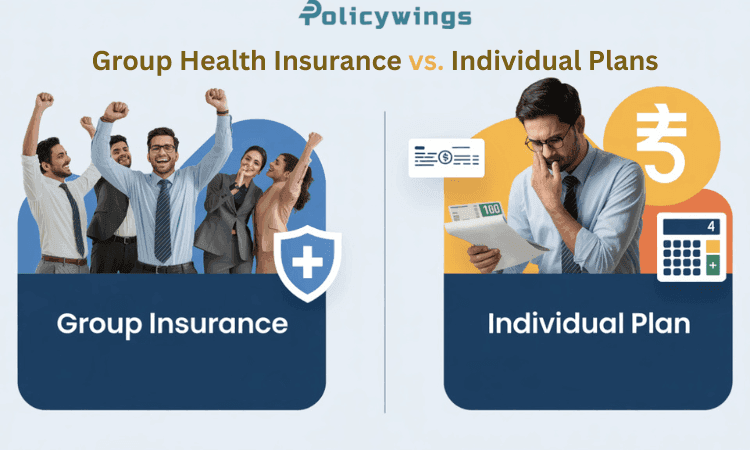
Group health insurance policies for employees is a main part of employer benefit plans in India. Companies with more than ten employees are required to offer a group medical insurance plan as per the rules established by Insurance Regulatory and Development Authority of India (IRDAI) and Employee’s State Insurance (ESI). This developing change is considered not only compliance but also changing legal requirements and employee expectations. Why Group Health Insurance Is a Legal Essential The social security framework in India is regulated by multiple interconnected laws: The Employee State Insurance Act of 1948 requires coverage for employees in the organised sector with an earning up to INR 21,000 per month. A. The employer contributes 3.25% and the employee contributes 0.75% of the wages. B. Addresses medical care, illness, injury, maternity, disability, family pensions and funeral costs. Insurance Act of 1938 and regulations set forth by the IRDAI A. The IRDAI regulates the terms, pricing and transparency of group insurance as stipulated in Section 34 of the Insurance Act. B. On 1 April 2020, the IRDAI mandated insurers to implement affordable group health plans for organisations returning to operations after the pandemic. Code on Social Security, 2020 Consolidates Employee State Insurance (ESI), Employee’s Provident Fund (EPF), gratuity, maternity benefits and other related benefits into a single framework. Mandatory Coverage: Who & What? Employers with ten or more employees not covered by ESI are required to provide group medical insurance in accordance with the IRDAI circular. Employers subject to ESI are not required to provide supplementary group plans as long as ESI coverage remains in effect. Employees with a monthly income exceeding INR 21,000 who are not covered by ESI but are legally required to obtain group health insurance (GHI) as an alternative. Important Legal Obligations for Employers Obligations of care within common law and statutory frameworks Employers are obligated to ensure workplace health and safety and a responsibility that is both implied in contracts and reinforced by legislation such as the OSH Code 2020. Adherence to the terms set forth by the IRDAI policy The IRDAI mandates disclosures regarding premiums and establishes timelines for claim settlements and even outlines channels for grievance redressal. Insurers are required to provide transparent contracts. Consequences for failure to comply Failure to offer required coverage may attract fines, imprisonment, loss of business licence and reputational harm. Important Differences Between Individual and Group Health Insurance Structure and cost sharing Group policies: employers pay all or part of the premiums; bulk bargaining can lower expenses. Individual: employee paid with modifiable coverage. Scope of coverage Group: includes COVID-19 care, maternity, OPD, ambulance, hospitalisation and pre-existing conditions (often immediate). Individual: may initially rule out pre-existing conditions; requires customised add-ons. Portability Group health plans are subject to IRDAI portability rules which provide continuity in the event of an insurer change. Legal Precedents & Contractual Implications The UK Court of Appeal looked at implied employer duties in insurance benefit plans in Crossley v. Faithful & Gould (2004). Group insurance provisions must be explicitly incorporated into employment contracts in India, with any ambiguities being settled in the worker’s favour in accordance with the rules of contract law. Best Practices for Implementing Group Health Insurance Clarity of eligibility In employment agreements and policy wording which specify covered employees (permanent, contract and trainees). Sufficient levels of sum insured In order to improve retention which is to take into account medical inflation and if possible include parent or family coverage. When appropriate smooth integration with ESI Make sure covered employees are properly identified while avoiding redundant coverage. Audits and policy renewals Engage the finance and human resources and legal departments in yearly reviews of the claims ratio, exclusions and renewals. Communication among employees and the resolution of grievances As required by IRDAI notification has to be sent to staff members of benefits and claim procedures and keep track of grievances. Benefits and Strategic Importance Attracting talent and increasing productivity According to studies insured workers are more dedicated and can take fewer sick days and work longer. Tax advantages Employees benefit from Section 80D deductions for individual health plans and premiums are deductible business expenses. Social and moral accountability Encouraging employee health is in line with Environmental, Social and Governance (ESG) objectives and shows corporate citizenship. Conclusion Employee group insurance is backed by corporate health insurance plans and has transitioned from optional perk to legal imperative in India. The dual framework of ESI Act and IRDAI regulations compels organisations especially those with ten or more employees to implement robust health coverage mechanisms. Employers should view these not as merely statutory burdens but strategic tools to foster wellbeing, loyalty and resilience. Legal perspective: Make policies in accordance with the Code on Social Security 2020 the Insurance Act of 1938 and IRDAI guidelines. Include provisions pertaining to health insurance in employment contracts. To prevent statutory penalties and to keep an eye on compliance. Make use of health benefits to boost output and brand recognition.

Written bySagar NarangPublished onSeptember 29, 2025
A Breakdown of Group Health Insurance for Your EmployeesGroup Insurance

A Breakdown of Group Health Insurance for Your Employees

Introduction Employee group insurance and corporate health insurance plans have become essential components of employer benefits programs in India, particularly following 2020. Organisations with more than 10 employees are required to offer a group medical insurance plan in accordance with IRDAI and ESI regulations. This transition signifies not only compliance but also the changing landscape of legal obligations and employee anticipations. Why Group Health Insurance Is a Legal Essential The social security framework in India is regulated by multiple interconnected laws: The Employee State Insurance Act of 1948 mandates coverage for employees in the organised sector with earnings up to INR 21,000 per month. A. The employer contributes 3.25% and the employee contributes 0.75% of wages. B. Addresses medical care, illness, injury, maternity, disability, family pensions, and funeral costs. Insurance Act of 1938 and regulations set forth by the IRDAI A. The IRDAI regulates the terms, pricing, and transparency of group insurance as stipulated in Section 34 of the Insurance Act. B. On 1 April 2020, the IRDAI mandated insurers to implement affordable group health plans for organisations returning to operations after the pandemic. Code on Social Security, 2020 Consolidates Employee State Insurance (ESI), Employee’s Provident Fund (EPF), gratuity, maternity benefits, and other related benefits into a single framework. Mandatory Coverage: Who & What? Employers with ten or more employees not covered by ESI are required to provide group medical insurance in accordance with the IRDAI circular. Employers subject to ESI are not required to provide supplementary group plans as long as ESI coverage remains in effect. Employees with a monthly income exceeding INR 21,000, who are not covered by ESI, are legally required to obtain group health insurance (GHI) as an alternative. Core Legal Obligations for Employers Obligations of care within common law and statutory frameworks Employers are obligated to ensure workplace health and safety, a responsibility that is both implied in contracts and reinforced by legislation such as the OSH Code 2020. Adherence to the terms set forth by the IRDAI policy The IRDAI mandates disclosures regarding premiums, establishes timelines for claim settlements, and outlines channels for grievance redressal. Insurers are required to provide transparent contracts. Consequences for failure to comply Failure to offer required coverage may attract fines, imprisonment, loss of business licence, and reputational harm. Important Differences Between Individual and Group Health Insurance Structure and cost sharing Group policies: employers pay all or part of the premiums; bulk bargaining can lower expenses. Individual: employee paid, with modifiable coverage. Scope of coverage Group: includes COVID-19 care, maternity, OPD, ambulance, hospitalisation, and pre-existing conditions (often immediate). Individual: may initially rule out pre-existing conditions; requires customised add-ons. Portability Group health plans are subject to IRDAI portability rules, which provide continuity in the event of an insurer change. Legal Precedents & Contractual Implications The UK Court of Appeal looked at implied employer duties in insurance benefit plans in Crossley v. Faithful & Gould (2004). Group insurance provisions must be explicitly incorporated into employment contracts in India, with any ambiguities being settled in the worker’s favour in accordance with the rules of contract law. Best Practices for Implementing Group Health Insurance Clarity of eligibility In employment agreements and policy wording, specify covered employees (permanent, contract, and trainees). Sufficient levels of sum insured In order to improve retention, take into account medical inflation and, if possible, include parent or family coverage. When appropriate, smooth integration with ESI Make sure covered employees are properly identified while avoiding redundant coverage. Audits and policy renewals Engage the finance, human resources, and legal departments in yearly reviews of the claims ratio, exclusions, and renewals. Communication among employees and the resolution of grievances As required by IRDAI, notify staff members of benefits and claim procedures and keep track of grievances. Benefits and Strategic Importance Attracting talent and increasing productivity According to studies, insured workers are more dedicated, take fewer sick days, and work longer. Tax advantages Employees benefit from Section 80D deductions for individual health plans, and premiums are deductible business expenses. Social and moral accountability Encouraging employee health is in line with Environmental, Social, and Governance (ESG) objectives and shows corporate citizenship. Conclusion Employee group insurance, backed by corporate health insurance plans, has transitioned from optional perk to legal imperative in India. The dual framework of ESI Act and IRDAI regulations compels organisations especially those with ten or more employees to implement robust health coverage mechanisms. Employers should view these not as merely statutory burdens but strategic tools to foster wellbeing, loyalty, and resilience. Legal perspective: Create policies in compliance with the Code on Social Security 2020, the Insurance Act of 1938, and IRDAI guidelines. Include provisions pertaining to health insurance in employment contracts. To prevent statutory penalties, keep an eye on compliance. Make use of health benefits to boost output and brand recognition.

Written byRahul NarangPublished onAugust 28, 2025