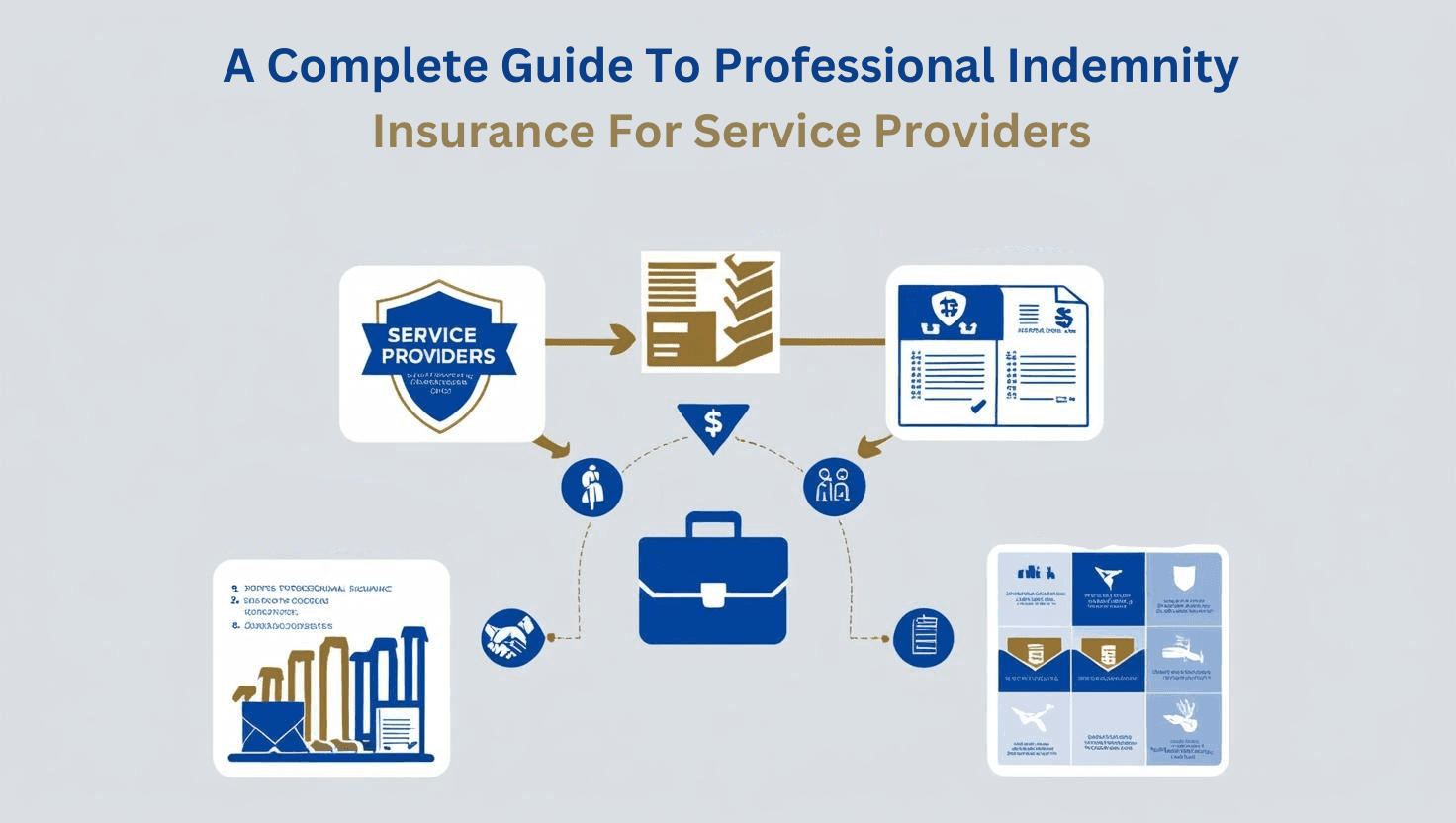
A Complete Guide To Professional Indemnity Insurance For Service Providers
By Sagar Narang
A Complete Guide To Professional Indemnity Insurance For Service Providers

Whether you are a seasoned professional or a top business owner, no matter how smart you are, it’s very human to make mistakes. There is always some risk with consulting and providing services but if it causes a financial or legal problem to your clients, what will you do? Dealing with a lawsuit or claim is never easy. It can put you under severe financial strain, there can be a loss of credibility and might even end up shutting your business. Professional Indemnity Insurance (PII) will protect you when things go out of control.

Table of Contents

Toggle

What Is Professional Indemnity Insurance?

Let’s start with the basics of the concept. In simple words, even if you make a mistake, your business can continue to operate and you won’t have to face any financial troubles. If your client claims to suffer a financial loss or any other damage because of you, PII will support you throughout the situation. It could be an honest mistake but since it has impacted the client, you will have to pay for that. Thankfully, this insurance will cover the legal fees and other settlement costs that will be needed.

Why Do You Need It?

It takes only a small mistake to get slapped with lawsuits, lose a lot of money and ruin the entire reputation that you built over the years. If you are a service provider, you must have a PII. Here’s why:

  1. Mistakes Happen: It’s human to make mistakes. Even an accidental oversight in a report or calculation can lead to claims. This insurance won’t let your business be at risk because of a single error.
  2. Part of The Contracts: Some clients specifically ask you to have a PII to work with them and it also reflects your professionalism. Your potential clients can see that you take all responsibility for the work very seriously and are well-prepared for any situation.
  3. Reputation Protection: Legal actions can blemish a business’s image. If you have PII, your issues will be resolved quickly with the least damage. You will come across as more credible and committed to high standards of service. Hence, the clients will trust you more.
  4. Financial Security: It’s neither easy nor affordable to fight legal battles. Even minor claims can cost you a lot. But PII ensures you are not financially hit. With this insurance, you won’t have to pay the fee or compensation out of pocket.

What Does It Cover?

Professional Indemnity Insurance typically covers a bunch of situations that can cause you serious troubles:

  • Negligence: It will save you if you fail to meet the expected level of care at work. Example, an accountant miscalculates tax liabilities leading to financial penalties for the client.
  • Breach of Duty: If there has been a compromise with the confidentiality of the client or intellectual property like a consultant accidentally leaking sensitive client data. Such lawsuits will be managed.
  • Defamation: Let’s say you caused unintentional harm to someone’s reputation like publishing incorrect information about a client, you could face legal action but PII will handle it.
  • Errors or Omissions: If your mistakes made the client suffer financial losses, it will be settled through the insurance. Example, your marketing agency gave incorrect product details and now the client is losing sales**.**
  • Legal Costs: Even if the claim is baseless or you are not guilty, you still have to defend yourself in court and this is an expense. PII will cover lawyer fees and court expenses that have been incurred in the process.
  • Settlements: In case you are found guilty, you would have to settle with compensation to the clients. It can range from a few thousand to millions but thankfully, it’s insured.

However, you must remember that PII only covers honest mistakes and unwillful actions. If, upon searching, any evidence of fraud or intentional misconduct, is found, there will be no PII help.

Who Needs Professional Indemnity Insurance?

If it’s in the nature of your work to impact clients financially or handle sensitive information, considering PII is a must. With this, you can confidently provide services without the fear of facing legal repercussions. It’s extremely important for:

  • Consultants and Advisors: One wrong piece of advice and your clients could face financial consequences. Suppose a financial consultant recommends an investment that leads to losses for the client.
  • Medical Professionals: You can always expect legal action against you if patients feel mistreated. Poor diagnosis or prescription errors would wreak havoc on you.
  • Legal Professionals: Inaccuracy in documents or errors in representation can be a costly situation. If a lawyer misses the deadline or a hearing, the client will face losses.
  • Architects and Engineers: Of course, any mistake in design or calculations will be a disaster. A miscalculation will ruin the structure and will cause property damages and lawsuits.

How to Choose the Right PII Policy?

Picking the right policy is very important and it’s also easy if you consider these points:

  1. Know Your Risks: Each industry has unique risks associated. Make sure all the risks of your profession are covered.
  2. Coverage Limits: Be sure that your policy can handle even worst-case scenarios and you can get the maximum claim amount.
  3. Industry Needs: Besides the basics, the policy must also provide additional protection against specific industry-related situations.
  4. Ease of Claims: Always select an insurer that processes claims without any hassles. They must have a good reputation for quick service. Check reviews and testimonials before finalizing.
  5. Balance Cost and Coverage: Cheaper policies often offer limited coverage. Be safe and compare premiums to the potential financial impact of a certain legal action.

When Should You Get PII?

Honestly, immediately! It’s normally suggested to have a policy in hand even before you start offering services or signing contracts. If you wait too long, you are at a higher risk of being exposed to unnecessary troubles. A lot of PII policies only cover claims filed while the policy is active. In case you cancel your coverage and then make a claim, it won’t be covered, even if it’s for the work that’s already been done.

Conclusion

Providing professional services requires you to be very responsible and ready for the risks. Look at Professional Indemnity Insurance as a smart investment that will be a strong shield for your business and image and will give you peace of mind as well. It will help your business thrive even in the face of challenges. Show your clients that you’re reliable, only do the right thing, and win their confidence.


Share this article:

More on Business Insurance

Hand-picked reads on business insurance to help you decide with confidence.

Credit Insurance in India: Safeguarding SMEs Against Payment DefaultsMSME Insurance

Credit Insurance in India: Safeguarding SMEs Against Payment Defaults

Introduction Small and medium enterprises (SMEs) are the support systems of India’s economy which contributes nearly 30% to the GDP and employs millions across diverse sectors and still one of their biggest challenges lies in managing cash flow disruptions caused by delayed payments or outright defaults from buyers. In a cut throat market where access to credit is limited, even one unpaid invoice can hamper an SME’s financial stability. This is exactly when credit insurance in India comes into light as a strong safeguard providing trade credit protection to reduce risks and strengthen business security. Understanding Credit Insurance Credit insurance can also be termed as trade credit insurance or accounts receivable insurance which is a risk management instrument that secures businesses from losses arising due to failure of payment by buyers. If a customer fails due to insolvency, bankruptcy or prolonged delays then the insurer compensates the policyholder for a large portion of the outstanding dues. In the Indian framework, credit insurance provides a protection where delayed payments are a constant concern particularly for SMEs engaging with large corporations or overseas buyers. It makes sure that if a buyer fails to pay even then the business does not face sudden financial stress. Requirement for Trade Credit Protection for SMEs Cash Flow Stability: SMEs usually operate on low budgets and limited reserves. Even one default can interrupt working capital cycles which can make it hard to meet payroll or pay suppliers. Trade credit insurance helps maintain liquidity. Risk Variation: SMEs can benefit from the insurer’s risk assessment expertise which decreases exposure to high risk buyers instead of depending only on internal credit checks. Business Expansion: SMEs can assuredly extend credit to new customers and enter foreign markets including exports with the assurance of credit protection. Improved Borrowing Capability: Banks and financial institutions are more inclined to lend when receivables are insured which can increase the chances of SME’s access to credit. Growth of Credit Insurance in India Over some years, acknowledgement of credit insurance has grown due to rising trade volumes and payment uncertainties. The pandemic further made us focus on the significance of securing receivables as many businesses faced unexpected disruptions in buyer payments. Regulatory support from the Insurance Regulatory and Development Authority of India (IRDAI) has also played a significant part. Guidelines have been amended to make trade credit insurance more reachable to SMEs making sure that they can have coverage without complex procedures. Working of Credit Insurance The SME goes to an insurer or broker to purchase a credit insurance policy. The insurer checks the creditworthiness of the SME’s buyers. A coverage limit is given to each buyer which defines the maximum insured amount. If these’s a default then the SME submits a claim with supporting documents. After verification the insurer compensates a huge percentage of the loss which usually ranges between 75% and 90%. General Benefits for SMEs The most important benefits of credit insurance is recovering unpaid invoices but some extra advancements include: Stronger Negotiation Ability: Insured receivables provide SMEs with significant leverage when negotiating with banks or investors. Global Market Access: trade credit insurance for exporters serves as a safety net against foreign buyer risks, political instability and currency related payment problems. Operational Confidence: entrepreneurs can focus on productive strategies with less financial anxiety rather than tracking overdue payments. Improved Corporate Governance: Insurers often provide insights and data on buyer performance, helping SMEs build disciplined credit policies. Challenges in Adoption Credit insurance in India is still not effectively used despite its benefits. Several elements contribute to this void like: Low Awareness: Many SMEs are not familiar with trade credit protection or assume it is relevant only for big corporations. Perceived Costs: Business owners usually see premiums as an extra cost without acknowledging the potential savings from avoided losses. Complicated Terms: Insurance terms and procedural requirements may put off smaller businesses from exploring policies. Future Expectation for Trade Credit Protection in India The requirement for credit insurance in India is expected to increase gradually due to these reasons: Growing Trade Networks: SMEs will require protection against foreign buyer risks with India’s rising exports. Digital Development: Online platforms are making insurance products more reachable and customisable. Government Initiatives for SME Growth: Policy initiatives such as ‘Atmanirbhar Bharat’ and inducements for exporters will navigate demand for financial protections. Increased Banking Integration: Banks may promote insured receivables as part of lending conditions further which can normalise trade credit protection. Conclusion The risk of buyer defaults is a financial inconvenience and a survival challenge for SMEs in India. Credit insurance in India gives a strong solution by making sure there is trade credit protection, balanced cash flows and encouraging business confidence. Credit insurance will become a necessary part of SME risk management in coming years while challenges in awareness will still remain complex.

Written bySagar NarangPublished onOctober 7, 2025
What Does a Business Owners Policy (BOP) Cover in India?Business Insurance

What Does a Business Owners Policy (BOP) Cover in India?

Introduction Business Owners Policy India and BOP insurance provide a streamlined, cost effective safety net for small and medium enterprises. In India, where operational risks range from property damage to legal liability, a business owner’s policy provides flexible coverage and strong compliance making it the perfect choice for companies wishing to combine several insurance policies under one roof. Understanding the Scope of a BOP Insurance for Indian Businesses Typically, a Business Owners Policy combines necessary business coverages into a single, specially designed product that is adapted to the complex requirements of Indian commercial enterprises. In general, these bundles include: Property insurance protects tangible assets such as structures, equipment, supplies and fixtures. Liability insurance that guards against third party claims of harm or property loss brought on by company operations. BOP insurance offers simplified administration, affordable premiums and improved clarity by combining these essential protections; this is particularly beneficial given India’s heterogeneous regulatory and sectoral environment. Property Coverage: Protecting Business Infrastructure and Inventory Property insurance is the foundation of a BOP. It protects material assets from dangers like fire, theft, rioting, natural disasters and other disasters. These include business buildings, plant and machinery, equipment and stock. Insurers have to precisely define covered perils, exclusions and valuation techniques in compliance or accordance with India’s General Insurance Business Regulations and Compliances. To prevent claims frictions it is important for the businesses to make sure that the policy wording clearly defines all the covered risks (e.g. fire and related hazards, flood, storm and burglary) and also specifies the valuation bases (e.g. indemnity, replacement cost or market value). Realistic asset values and policy limits that are in line with day to day operational realities are essential components of a legally sound policy. Liability Coverage: Shielding Against Third Party Claims In order to protect against third party claims for property damage or bodily injury resulting from routine business operations, liability protection under a BOP is essential. A duty of care is emphasised by India’s tort laws and statutory provisions, which hold companies liable for negligence even in routine operations. Usually, BOP provisions pay for settlement sums, medical bills or legal defence costs. The policy must be in line with the operational scope of the business because liability landscapes vary, ranging from small offices to manufacturing setups or shopfront locations. Systematic, efficient orequitable claim settlements are made sure by clearly stating the limitations, exclusions (e.g. professional liability) and claim procedures. Business Interruption Coverage Costly revenue interruptions can result from disruptions caused by fire, flood or other hazards. Business interruption coverage, which compensates for lost revenue and covers short term relocation or replacement costs while operations are resumed, is how BOP insurance handles this. Clearly stated indemnity triggers, waiting periods and the duration of coverage are essential given India’s regulatory emphasis on equitable settlement practices. Companies should verify whether the policy accounts for increased expenses during downtime and whether it determines loss based on actual earnings or projected operational income. Additional or Optional Add Ons in BOP Insurance Insurers in India may provide additional modules to enhance protection even though the standard BOP framework combines property, liability and business interruption coverage: Equipment Breakdown Cover: Guards against electrical or mechanical malfunctions. Cash or negotiable instruments stored on site are protected by money and securities insurance. Employee dishonesty: Protects against dishonest behaviour by staff members. Glass Damage: Protection against harm to windows or fixtures made of glass. Extensions for Natural Disasters: Adding coverage for cyclones or earthquakes where necessary. It depends on the industry and the main exposure profile of the company. These options may be beneficial whether it is a professional office, cafe, small manufacturer or textile retailer. To promise or guarantee enforceability and transparency it is advisable to make sure or confirm that any add ons relevant to the regulations set forth by the Insurance Regulatory and Development Authority of India (IRDAI). Legal Regulatory Framework Clarity and transparency in a policy is important in Indian insurance jurisprudence. Courts interpret ambiguous terms against the insurer by applying the contra proferentem principle. Uncertain exclusions, for instance, weakened insurer’s positions in cases like United India Insurance Co. Ltd. v. Lotus Petrofils (P) Ltd., leading to rulings in favour of the insured. BOP policies must therefore state: Well defined covered hazards and specified exclusions (e.g., hostile fire, unseaworthiness, standard exclusions). Conditions for valuation claims in order to ensure predictable and enforceable indemnity, particularly for stock and property. Succinct, clear definitions of “premises”, “business interruption,” and other key terms. The policy’s legal integrity is strengthened by making sure these components comply with insurer disclosure requirements under the Insurance Act and related regulations as well as IRDAI mandated product filing standards. Evaluating BOPs for Coverage Suitability in India Indian companies, whether they are small manufacturers, retailers or service providers, should evaluate coverage in relation to their unique risk profile, geographic location and legal requirements when contemplating a business owner’s policy. Important things to think about are: Location and exposure of the business, such as areas vulnerable to earthquakes, floods or high theft rates. Accurate asset values are necessary to establish suitable boundaries. Operational sensitivity and continuity requirements, particularly in cases where disruptions have a significant impact on profitability. The way third parties interact shapes the risk of liability. Legal soundness, unambiguous contract language, IRDAI compliance and matching coverage to actual exposures rather than merely meeting regulatory minimums should be the main topics of an informed discussion with insurers. The Strategic Value of a BOP Insurance Policy For Indian businesses looking for comprehensive risk management effectiveness, a well designed BOP insurance plan can be a valuable strategic asset. Businesses can gain from more transparent terms, consistent coverage and possibly lower combined premiums by combining several essential coverages: property, liability, business interruption,and optional extensions under a single policy. A business owner’s policy can be transformed from insurance into a governance tool with clear content, regulated product filing and legally sound wording. It protects corporate continuity from routine
Written byRahul NarangPublished onSeptember 5, 2025
Insurance for Tech Companies in India: A Custom Legal and Risk Management GuideBusiness Insurance

Insurance for Tech Companies in India: A Custom Legal and Risk Management Guide

Introduction Insurance for Tech companies and SaaS business insurances in India are very important nowadays relating to corporate risk management plannings and strategies. For every tech company adapting insurance coverage for everyday functional realities and legal regulations is essential for technology business, whether they are large or in small scale SaaS providers, mid sized software companies, or upcoming startups. Protecting assets, brand reputation, and its continuity in a fast developing digital economy mandates synchronising your insurance portfolio directly to contractual exposures, market expectations, and mainly regulatory standards. Governing Legal Regulations of Insurance in India The Insurance Regulatory and Development Authority of India (IRDAI) is the one which regulates the insurance sector in India and is governed by the Insurance Act, 1938 (as amended). There is no statute that mainly explains or covers for technology specific insurance, but the Insurance Regulatory and Development Authority of India (Registration of Indian Insurance Companies) Regulations and IRDAI (Insurance Advertisements and Disclosure) Regulations are the main two IRDAI regulations that portrays its impacts on design, marketing, and approval of insurance products pertinent to tech companies, This means that insurers must follow to IRDAI’s regulatory requirements, product standards, and solvency rules specifically for tech companies. It is your responsibility as the insured to make sure that the policy documents comply with IRDAI and that the coverage is specifically customised to your technology risk profile. Professional Indemnity (Errors & Omissions) for Tech Service Providers Errors & Omissions (E&O) insurance is also known as professional indemnity insurance which protects against allegations of carelessness, contract violations or poor service. To avoid confusion, insurance contracts must separately define all the terms such as “software error”, “system failure”, or “data breach” and they must be in accordance with the Indian Contract Act of 1872. Furthermore, uncertainties under insurance terms are interpreted in the insured’s favour, according to case laws, as in United India Insurance Co. Ltd. v. Lotus Petrofils (P) Ltd. IT companies are the ones who have to carefully draft their coverage clauses to prevent legal issues, disputes or any violations of the Insurance Ombudsman Rule of 2017.. Cyber Liability and Data Protection Compliances Cyber liability insurance is important as well for SaaS companies and data driven tech/IT companies. Strict requirements for safeguarding and protecting sensitive and personal data are imposed by the Information Technology Act of 2000 and also by the seminal Puttaswamy ruling, which explicitly acknowledged the constitutional right to privacy under Article 21 of Indian Constitution. Fines, breach notification expenses, client compensation, and business interruption are the regulators brought on by cyberattacks that must be covered by a strong and reliable cyber policy. Both first party (own losses) and third party (client claims) liabilities should be covered. Business Interruption Cover for SaaS Revenue Models Because SaaS providers depend on subscription based revenue streams, business interruption (BI) insurance is specifically crucial to them. Significant losses may come from a third party service provider failure or system outage. To be in line with the SaaS operating model, policies must determine indemnity based on actual recurring revenue rather than one time sales. Indian courts have understood that indemnity must correlate with the insured’s actual loss profile, otherwise claims may be denied. Directors & Officers (D&O) Liability Directors and officers may be held personally accountable under the Companies Act of 2013 for the non compliance, poor management, or false fundraising statements. Leadership is safeguarded from such claims by D&O insurance, which pays for settlements and defence expenses. For SaaS and tech companies that are developing and have strict investor and regulatory supervision, this is especially important. Intellectual Property (IP) Protection Insurance Tech firms mostly depend on trademarks, licensed code, and proprietary software. High litigation costs can result from disputes concerning the Trade Marks Act of 1999 and the Copyright Act of 1957. Regardless of the fact that you are the claimant or the defendant in an infringement case, intellectual property insurance gives financial favours for defence and damages. IP coverage is enhancing the calculated investment due to the high demand in open source usage and international collaborations. Public and Product Liability Public or product liability insurance is important, if your technology includes hardware, internet devices, or on site installations, even though it is not that common for SaaS providers purely. Furthermore, under the Law of Torts, the liability claims for personal injury or property damage can be very large. Clear terminologies and corrective as well as adequate coverage limits are important for policies in this classification, which are governed by general liability rules under IRDAI guidelines. Case Law Insights Undetermined insurance terms are disadvantageous to the insurer, according to Indian courts. In case such as United India Insurance Co. Ltd. v. Lotus Petrofils (P) Ltd., the contra proferentem principle was imposed, which means that clear terms or exclusion of definitions which are required are interpreted on the behalf of the insured. This exposes how important it is for tech companies to correct negotiations, clear policy terms, particularly in niche markets like IP, E&O, and cyber insurance. Building a strong Insurance Portfolio A SaaS or tech company should take multiple approaches to insurance mainly in India, one of which is Professional Indemnity for Service Failures (E&O). Cyber Liability for Regulatory Exposures and Data Breach Aligning business interruption with SaaS revenue models D&O Liability for Protecting Leadership Defence and enforcement of intellectual property infringement Product and Public Liability for Physical Interfaces Whenever there are major functional and operational changes, like the introduction of new products, geographic expansion, or funding rounds, these layers should be rechecked. Conclusion In India’s rapidly evolving technology sector, SaaS business insurance and other customised risk solutions mainly serve as strategic safeguards planning safe rather than mere formalities. Coordinating policies with the Insurance Act of 1938, IRDAI regulations and sector specific legal regulatory safeguards the company against regulatory functions and reputational risks. Prioritise legal compliance/ regulations, precise/correct policy wording, and alignment of coverage with your actual risk profile positions for your tech business’s sustainability and defensibility growth.

Written byRahul NarangPublished onSeptember 2, 2025

You may also like: Property Insurance

Related guides from our property insurance desk.

How to Compare Property Insurance Quotes in India?Property Insurance

How to Compare Property Insurance Quotes in India?

Introduction Damage to property can be a huge loss. We need reliable property insurance to protect our home, workplace or any other valuable property against uncertainties. It’s certainly a must-have. But there are just so many different property insurance plans out there. Each insurance company makes the same promise. They claim to offer affordable premiums, extensive coverage and quick & easy claim settlements. With so many options, how do you know which one is actually the one for you? Comparing property insurance quotes is very important; it’s just like comparing prices before buying a gadget or maybe a bike. Only by analysing multiple insurance quotes can you find the perfect option that offers value for money. Why Property Insurance Matters Buying a property, whether a home or a place of work, means making one of the biggest investments. Any kind of damage to it due to fire, theft, accident or even a natural disaster leads to a huge financial loss that can only be covered with a property insurance policy. The right property insurance plans in place will: Protect your property from damaging natural disasters. Cover losses that may happen due to fire or explosions on the premises. Get protection for the loss in case of robbery. Stay protected in case of accidental damage. Continue with the business if it was a commercial property. Getting a property insurance plan gives you assurance that you won’t have to face the entire financial burden alone in case of an unexpected mishap. What Are Property Insurance Quotes? When you reach out to an insurance company to buy a policy, they give you a cost estimate for the kind of coverage you’re seeking. This is called a property insurance quote and it includes various information like: The premium: How much you will have to pay and the frequency (monthly, quarterly or annually). The coverage details: What all risks are covered and the maximum amount that’ll be received. The deductibles: How much would you have to pay from your pocket before the insurance comes into the picture. All the detailed terms and conditions of the insurance policy. Upon comparing property insurance quotes, you not only see the difference in the prices but also what you will actually pay for. Why It’s Important to Compare Property Insurance Quotes? Would you ever buy the car you see in the showroom without checking a few more? You won’t! And the same behaviour should be for insurance. Here’s why you must compare: Save Money– Different companies offer similar coverage but premiums may differ. When you compare, you can get the most cost-effective deal. Understand Coverage– Not all property insurance plans available will cover the same set of risks. For example, some companies just don’t include natural disasters. Avoid Surprises– Reading the details carefully helps you know what’s included and what’s not and hence, no shocks later during claims. Tailor to Needs– By comparing, you choose the correct plan for your property type, whether it’s residential, commercial, rental, etc. Best Ways to Compare Property Insurance Quotes Now comes the main part! How exactly should you compare quotes so that you end up making a smart decision? Look Beyond the Premium While it’s normal to check the price as the first thing, it’s not a good idea to get swayed by the cheapest property insurance quotes. A low premium often means either that the coverage is limited or the deductibles are high. Let’s say you might find one policy at ₹7,000 per year and the other one at ₹11,500. The catch is that the cheaper one doesn’t cover natural disasters, while the expensive one does. Hence, you get better value in the second one. Check the Coverage in Detail Not all property insurance plans will protect you against the same set of risks. The coverage should match your property type and location risks. So, make sure that all this is included: Damage due to fire and accident Natural calamities cover Theft or burglary Electrical or mechanical breakdown Third-party liability (you causing damage to another person’s property) Understand Deductibles Basically, a deductible is the amount you agree to pay before insurance kicks in and lower premiums usually have higher deductibles. When comparing property insurance quotes, don’t miss out on this point. Say your policy has a ₹40,000 deductible. So if your damage is ₹65,000 then the insurance will only cover ₹25,000. Compare Claim Settlement Ratios Getting a property insurance plan is only useful if the company doesn’t make a fuss while settling claims. You must check the claim settlement ratio of the insurer and learn how many claims they actually take action on. Even if the premium is slightly higher, go for a trusted insurer because a cheap plan might delay payments. Look for Add-Ons and Benefits Some insurers offer extra features. Adding them may slightly increase your premium but then the protection also becomes wider. You can consider: Rent loss cover: If you live in a rented house and it becomes unlivable after damage, the policy will help. Coverage for valuable contents inside the property: It provides coverage for jewelry, expensive appliances, etc. Temporary accommodation expenses: In case you can’t stay in your home after damage, that will be taken care of. Compare Policy Terms and Exclusions Always read the fine print because you might assume some coverage when it might not be there. Like some plans don’t include damages caused by negligence or damages from gradual wear and tear. And when you carefully compare property insurance quotes, you’ll know exactly what you’re getting. Check Flexibility of Payment Plans Some insurers allow you to pay premiums at your preferred duration. Monthly, quarterly or annually; you choose. You can always pick what fits your budget and which option helps you save more over time. Monthly vs Annual Premiums – Which is Better? When you have a bunch of property insurance quotes with you, you’ll notice that there is also an option of paying monthly or annual premiums. Here’s the difference:

Written byRahul NarangPublished onDecember 11, 2025

Explore: Group Insurance

Broaden your view with a quick read on group insurance.

A Breakdown of Group Health Insurance for Your EmployeesGroup Insurance

A Breakdown of Group Health Insurance for Your Employees

Group health insurance policies for employees is a main part of employer benefit plans in India. Companies with more than ten employees are required to offer a group medical insurance plan as per the rules established by Insurance Regulatory and Development Authority of India (IRDAI) and Employee’s State Insurance (ESI). This developing change is considered not only compliance but also changing legal requirements and employee expectations. Why Group Health Insurance Is a Legal Essential The social security framework in India is regulated by multiple interconnected laws: The Employee State Insurance Act of 1948 requires coverage for employees in the organised sector with an earning up to INR 21,000 per month. A. The employer contributes 3.25% and the employee contributes 0.75% of the wages. B. Addresses medical care, illness, injury, maternity, disability, family pensions and funeral costs. Insurance Act of 1938 and regulations set forth by the IRDAI A. The IRDAI regulates the terms, pricing and transparency of group insurance as stipulated in Section 34 of the Insurance Act. B. On 1 April 2020, the IRDAI mandated insurers to implement affordable group health plans for organisations returning to operations after the pandemic. Code on Social Security, 2020 Consolidates Employee State Insurance (ESI), Employee’s Provident Fund (EPF), gratuity, maternity benefits and other related benefits into a single framework. Mandatory Coverage: Who & What? Employers with ten or more employees not covered by ESI are required to provide group medical insurance in accordance with the IRDAI circular. Employers subject to ESI are not required to provide supplementary group plans as long as ESI coverage remains in effect. Employees with a monthly income exceeding INR 21,000 who are not covered by ESI but are legally required to obtain group health insurance (GHI) as an alternative. Important Legal Obligations for Employers Obligations of care within common law and statutory frameworks Employers are obligated to ensure workplace health and safety and a responsibility that is both implied in contracts and reinforced by legislation such as the OSH Code 2020. Adherence to the terms set forth by the IRDAI policy The IRDAI mandates disclosures regarding premiums and establishes timelines for claim settlements and even outlines channels for grievance redressal. Insurers are required to provide transparent contracts. Consequences for failure to comply Failure to offer required coverage may attract fines, imprisonment, loss of business licence and reputational harm. Important Differences Between Individual and Group Health Insurance Structure and cost sharing Group policies: employers pay all or part of the premiums; bulk bargaining can lower expenses. Individual: employee paid with modifiable coverage. Scope of coverage Group: includes COVID-19 care, maternity, OPD, ambulance, hospitalisation and pre-existing conditions (often immediate). Individual: may initially rule out pre-existing conditions; requires customised add-ons. Portability Group health plans are subject to IRDAI portability rules which provide continuity in the event of an insurer change. Legal Precedents & Contractual Implications The UK Court of Appeal looked at implied employer duties in insurance benefit plans in Crossley v. Faithful & Gould (2004). Group insurance provisions must be explicitly incorporated into employment contracts in India, with any ambiguities being settled in the worker’s favour in accordance with the rules of contract law. Best Practices for Implementing Group Health Insurance Clarity of eligibility In employment agreements and policy wording which specify covered employees (permanent, contract and trainees). Sufficient levels of sum insured In order to improve retention which is to take into account medical inflation and if possible include parent or family coverage. When appropriate smooth integration with ESI Make sure covered employees are properly identified while avoiding redundant coverage. Audits and policy renewals Engage the finance and human resources and legal departments in yearly reviews of the claims ratio, exclusions and renewals. Communication among employees and the resolution of grievances As required by IRDAI notification has to be sent to staff members of benefits and claim procedures and keep track of grievances. Benefits and Strategic Importance Attracting talent and increasing productivity According to studies insured workers are more dedicated and can take fewer sick days and work longer. Tax advantages Employees benefit from Section 80D deductions for individual health plans and premiums are deductible business expenses. Social and moral accountability Encouraging employee health is in line with Environmental, Social and Governance (ESG) objectives and shows corporate citizenship. Conclusion Employee group insurance is backed by corporate health insurance plans and has transitioned from optional perk to legal imperative in India. The dual framework of ESI Act and IRDAI regulations compels organisations especially those with ten or more employees to implement robust health coverage mechanisms. Employers should view these not as merely statutory burdens but strategic tools to foster wellbeing, loyalty and resilience. Legal perspective: Make policies in accordance with the Code on Social Security 2020 the Insurance Act of 1938 and IRDAI guidelines. Include provisions pertaining to health insurance in employment contracts. To prevent statutory penalties and to keep an eye on compliance. Make use of health benefits to boost output and brand recognition.

Written bySagar NarangPublished onSeptember 29, 2025
A Breakdown of Group Health Insurance for Your EmployeesGroup Insurance

A Breakdown of Group Health Insurance for Your Employees

Introduction Employee group insurance and corporate health insurance plans have become essential components of employer benefits programs in India, particularly following 2020. Organisations with more than 10 employees are required to offer a group medical insurance plan in accordance with IRDAI and ESI regulations. This transition signifies not only compliance but also the changing landscape of legal obligations and employee anticipations. Why Group Health Insurance Is a Legal Essential The social security framework in India is regulated by multiple interconnected laws: The Employee State Insurance Act of 1948 mandates coverage for employees in the organised sector with earnings up to INR 21,000 per month. A. The employer contributes 3.25% and the employee contributes 0.75% of wages. B. Addresses medical care, illness, injury, maternity, disability, family pensions, and funeral costs. Insurance Act of 1938 and regulations set forth by the IRDAI A. The IRDAI regulates the terms, pricing, and transparency of group insurance as stipulated in Section 34 of the Insurance Act. B. On 1 April 2020, the IRDAI mandated insurers to implement affordable group health plans for organisations returning to operations after the pandemic. Code on Social Security, 2020 Consolidates Employee State Insurance (ESI), Employee’s Provident Fund (EPF), gratuity, maternity benefits, and other related benefits into a single framework. Mandatory Coverage: Who & What? Employers with ten or more employees not covered by ESI are required to provide group medical insurance in accordance with the IRDAI circular. Employers subject to ESI are not required to provide supplementary group plans as long as ESI coverage remains in effect. Employees with a monthly income exceeding INR 21,000, who are not covered by ESI, are legally required to obtain group health insurance (GHI) as an alternative. Core Legal Obligations for Employers Obligations of care within common law and statutory frameworks Employers are obligated to ensure workplace health and safety, a responsibility that is both implied in contracts and reinforced by legislation such as the OSH Code 2020. Adherence to the terms set forth by the IRDAI policy The IRDAI mandates disclosures regarding premiums, establishes timelines for claim settlements, and outlines channels for grievance redressal. Insurers are required to provide transparent contracts. Consequences for failure to comply Failure to offer required coverage may attract fines, imprisonment, loss of business licence, and reputational harm. Important Differences Between Individual and Group Health Insurance Structure and cost sharing Group policies: employers pay all or part of the premiums; bulk bargaining can lower expenses. Individual: employee paid, with modifiable coverage. Scope of coverage Group: includes COVID-19 care, maternity, OPD, ambulance, hospitalisation, and pre-existing conditions (often immediate). Individual: may initially rule out pre-existing conditions; requires customised add-ons. Portability Group health plans are subject to IRDAI portability rules, which provide continuity in the event of an insurer change. Legal Precedents & Contractual Implications The UK Court of Appeal looked at implied employer duties in insurance benefit plans in Crossley v. Faithful & Gould (2004). Group insurance provisions must be explicitly incorporated into employment contracts in India, with any ambiguities being settled in the worker’s favour in accordance with the rules of contract law. Best Practices for Implementing Group Health Insurance Clarity of eligibility In employment agreements and policy wording, specify covered employees (permanent, contract, and trainees). Sufficient levels of sum insured In order to improve retention, take into account medical inflation and, if possible, include parent or family coverage. When appropriate, smooth integration with ESI Make sure covered employees are properly identified while avoiding redundant coverage. Audits and policy renewals Engage the finance, human resources, and legal departments in yearly reviews of the claims ratio, exclusions, and renewals. Communication among employees and the resolution of grievances As required by IRDAI, notify staff members of benefits and claim procedures and keep track of grievances. Benefits and Strategic Importance Attracting talent and increasing productivity According to studies, insured workers are more dedicated, take fewer sick days, and work longer. Tax advantages Employees benefit from Section 80D deductions for individual health plans, and premiums are deductible business expenses. Social and moral accountability Encouraging employee health is in line with Environmental, Social, and Governance (ESG) objectives and shows corporate citizenship. Conclusion Employee group insurance, backed by corporate health insurance plans, has transitioned from optional perk to legal imperative in India. The dual framework of ESI Act and IRDAI regulations compels organisations especially those with ten or more employees to implement robust health coverage mechanisms. Employers should view these not as merely statutory burdens but strategic tools to foster wellbeing, loyalty, and resilience. Legal perspective: Create policies in compliance with the Code on Social Security 2020, the Insurance Act of 1938, and IRDAI guidelines. Include provisions pertaining to health insurance in employment contracts. To prevent statutory penalties, keep an eye on compliance. Make use of health benefits to boost output and brand recognition.

Written byRahul NarangPublished onAugust 28, 2025